
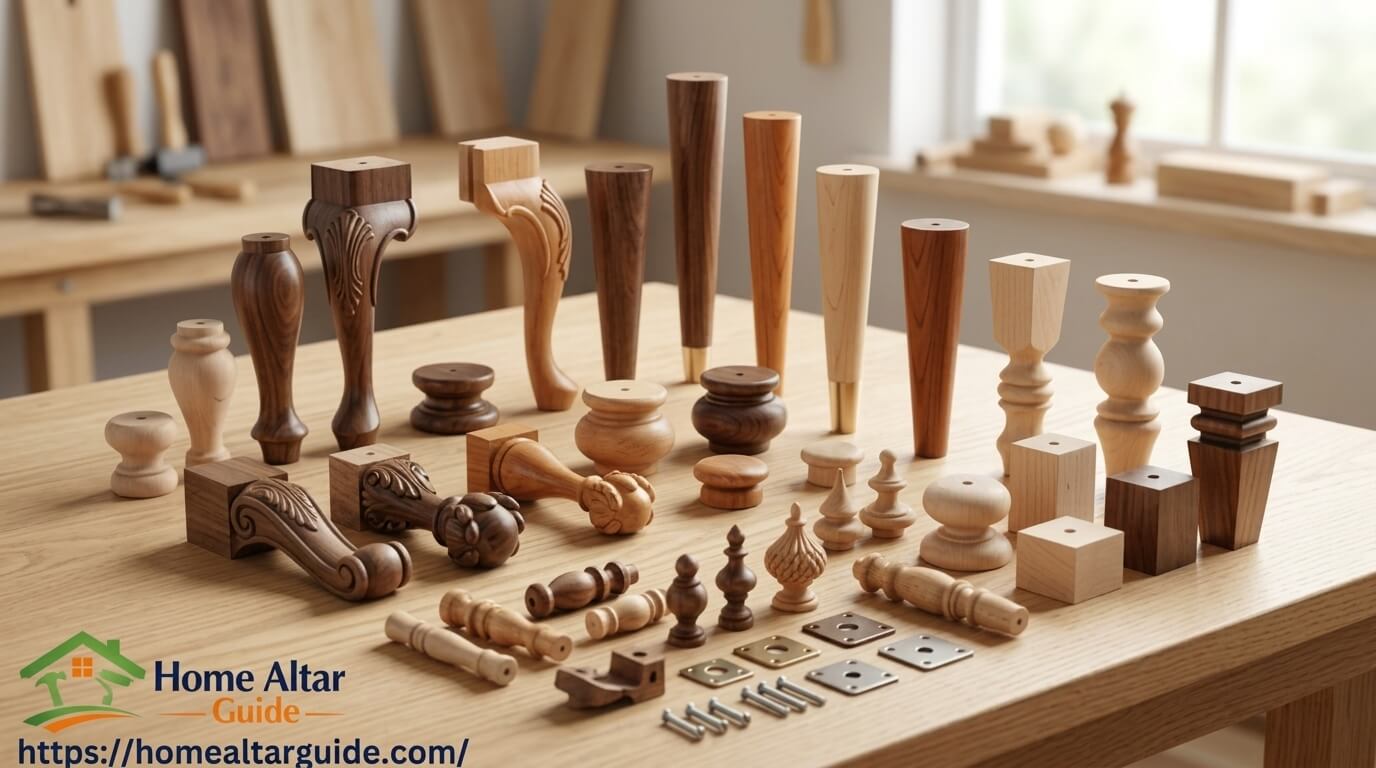

It sounds small — replacing furniture legs. But the difference it makes is anything but. Decorative wooden furniture legs and decorative wooden furniture feet are among the most overlooked and most impactful furniture upgrades available to American homeowners today.
Whether you are restoring a vintage sofa, modernizing a plain IKEA cabinet, or replacing cracked legs on a beloved dresser, this guide covers everything you need to know about decorative wood furniture legs, feet, and components.
Why Furniture Legs Matter More Than You Think
Furniture legs define the style of a piece more than almost any other element. They determine whether something reads as modern, traditional, rustic, or eclectic. Change the legs, and you change the entire personality of a piece.
“The legs of a sofa are like shoes on a person — they finish the look and tell you everything about the style.” — Furniture Restorer
| Leg Style | Furniture Personality |
| Tapered mid-century | Modern, retro, sophisticated |
| Bun foot | Traditional, classic, British Colonial |
| Hairpin metal leg | Industrial, contemporary, minimal |
| Carved cabriole | Formal, French Provincial, antique |
| Square block | Modern farmhouse, transitional |
| Turned spindle | Colonial, traditional, American classic |
Types of Decorative Wooden Furniture Legs
Tapered Legs
Slim at the bottom, wider at the top. Popularized by mid-century modern design in the 1950s and 60s. Still one of the most popular choices for sofas, credenzas, and side tables today.
Turned Legs
Created on a lathe, turned legs feature decorative profiles with curves, bulges, and details. They are a hallmark of traditional American and Colonial furniture and work beautifully on beds, dining tables, and desks.
Cabriole Legs
S-curved legs with an outward knee and inward ankle. Classic in French Provincial and Queen Anne furniture. They often end in a ball-and-claw or pad foot.
Bun Feet
Round, ball-like feet attached to the bottom of case goods like dressers and cabinets. Decorative wooden furniture feet of this type are extremely popular in traditional and British-style furniture.
Square Tapered
Clean, angular lines with a slight taper. Popular in transitional and Shaker-style furniture. Versatile enough to work in both traditional and modern rooms.
Decorative Wood Furniture Legs: Materials
Not all wood legs are equal. The material affects both durability and appearance:
- Solid oak — extremely durable; natural grain adds character
- Solid maple — hard and smooth; takes paint and stain beautifully
- Pine — lighter and more affordable; slightly softer
- Birch — smooth grain; excellent for painted finishes
- MDF with veneer — affordable; consistent look but less durable
Decorative Metal for Wood Furniture: The Hybrid Approach
An increasingly popular trend is combining decorative metal for wood furniture with wooden elements. Metal legs — particularly hairpin-style — are often paired with wood tabletops and cabinet bodies. This creates a clean, modern look with industrial character.
Other metal-plus-wood combinations include:
- Brass leg caps on wooden turned legs
- Metal corner brackets on wood furniture corners
- Steel hairpin legs on a solid wood desktop
- Iron base with reclaimed wood tabletop
Decorative Wood Furniture Components Beyond Legs
Legs and feet are just the start. Decorative wood furniture components include a range of elements:
- Corner blocks — reinforce joints and add decorative detail to sofas and chairs
- Rosettes — circular ornamental discs at the junction of legs and rails
- Stretchers — horizontal bars connecting legs for stability and visual interest
- Aprons — the horizontal piece between legs; often routed or carved for decoration
- Finials — decorative tops for bedposts, clocks, and mirrors
- Wooden furniture decorative parts — includes brackets, corbels, and custom carved details
How to Replace Furniture Legs: Step-by-Step
Step 1: Remove Old Legs
Most furniture legs screw in or attach via a metal plate. Use a wrench or screwdriver to remove them.
Step 2: Check the Mounting Type
Identify whether your furniture uses a threaded insert, a bolt plate, or a direct screw mount. New legs must match this system.
Step 3: Choose and Order New Legs
Select legs that match your desired style. Ensure the height works with your furniture (sofas and beds have specific height requirements for functionality).
Step 4: Install New Legs
Thread in or bolt on the new legs. Use thread locking fluid if the legs tend to spin loose over time.
Step 5: Check Level
Place the furniture on a flat surface and check that all legs touch the floor evenly. Add furniture levelers if needed.
📝 Note: When replacing sofa legs, the new legs should bring the seat height to 17-19 inches for optimal ergonomic comfort.
FAQs: Decorative Furniture Legs and Feet
Can I replace legs on any piece of furniture?
Most sofas, chairs, dressers, and side tables can have their legs replaced as long as you match the mounting system. Heavier items like dining tables require more planning to ensure structural integrity.
Where can I buy decorative wooden furniture legs?
Hardware stores, furniture supply companies, and online marketplaces all carry a wide range. Specialty woodworking suppliers often offer the best quality and variety.
How do I measure for replacement furniture legs?
Measure the current leg height from the floor to where it attaches to the furniture body. Note the mounting hardware type. Then shop for legs that match both measurements.
Explore our furniture blog for more ideas on furniture upgrades and decorating tips.
Key Takeaways
- Changing furniture legs is one of the most impactful low-cost furniture upgrades
- Leg style defines the entire personality of a furniture piece
- Match mounting systems when replacing legs
- Metal-and-wood combinations are a major current trend
- Wood components beyond legs — rosettes, corner blocks, aprons — add significant detail