
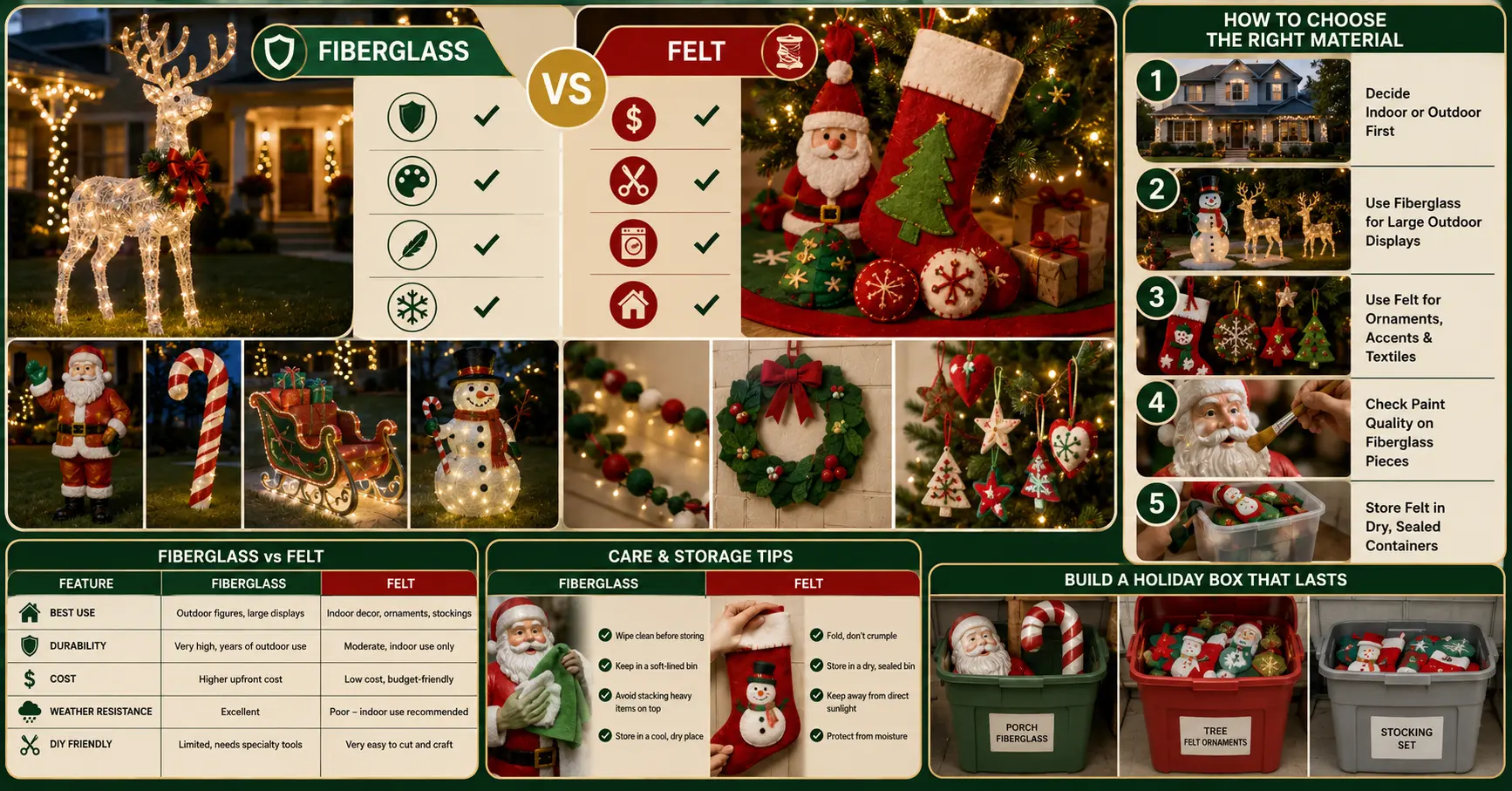

Every holiday decoration starts with a material choice, and that choice affects how long your decorations last, how much they cost, and how easy they are to store. Two materials come up again and again when homeowners shop for holiday pieces: fiberglass and felt. Both have loyal fans, but they’re built for very different jobs. This guide breaks down christmas decoration materials so you can decide what belongs in your home this year.
Fiberglass Christmas Decorations: Built to Last Outdoors
If you’ve ever seen a life-size lighted reindeer or a giant candy cane on someone’s front lawn, there’s a good chance it was made from fiberglass. Fiberglass christmas decorations are prized for their durability. Unlike plastic or resin, fiberglass resists cracking in freezing temperatures and holds its shape even after years of outdoor storage.
- Resistant to cracking in cold weather
- Holds paint and finish well, so colors stay vibrant for years
- Lightweight compared to resin or ceramic of the same size
- Common in large outdoor figures, sleighs, and yard displays
The tradeoff is cost. Fiberglass pieces are typically more expensive upfront than plastic alternatives, but many homeowners find the investment worth it since a well-made piece can last a decade or more with basic care.
Christmas Decoration Felt: Soft, Affordable, and Versatile
Christmas decoration felt is the material behind stockings, tree skirts, ornaments, and garland accents. It’s inexpensive, easy to cut into shapes, and doesn’t fray at the edges the way woven fabric does, which makes it a favorite for both store-bought decor and DIY projects.
Why Felt Works So Well for Indoor Decor
Felt has a soft, matte texture that pairs naturally with cozy, layered indoor styling. It’s also machine-washable in most cases, which matters for stockings and tree skirts that collect dust over the season. If you’re refreshing your interior design for the holidays, felt pieces are one of the easiest ways to add color without a big investment.
- Budget-friendly compared to velvet or wool blends
- Easy to cut, sew, or hot-glue for DIY ornaments
- Doesn’t fray, so edges stay clean without hemming
- Lightweight and easy to store flat between seasons
Fiberglass vs. Felt: Side-by-Side Comparison
| Feature | Fiberglass | Felt |
| Best use | Outdoor figures, large displays | Indoor decor, ornaments, stockings |
| Durability | Very high, years of outdoor use | Moderate, indoor use only |
| Cost | Higher upfront cost | Low cost, budget-friendly |
| Weather resistance | Excellent | Poor — indoor use recommended |
| DIY friendly | Limited, needs specialty tools | Very easy to cut and craft |
How to Choose the Right Material for Your Project
- Decide indoor or outdoor first — this narrows the choice immediately.
- For large yard displays, prioritize fiberglass for weather resistance.
- For ornaments, garland accents, or tree skirts, felt is more practical and affordable.
- Check the paint or dye quality on fiberglass pieces before buying secondhand.
- Store felt pieces in a dry, sealed container to prevent moisture damage.
Care and Storage Tips
Fiberglass figures should be wiped down with a soft cloth before storage to remove dust and moisture. Avoid stacking heavy items on top of fiberglass pieces, since the paint finish can chip under pressure. Felt items should be folded rather than crumpled, and stored away from direct sunlight to prevent fading. A few smart storage habits each January can make either material last for many holiday seasons.
If you’re also updating other parts of the house this season, felt-based accents pair especially well with soft furniture styling like throw pillows and blankets, giving your whole living room a cohesive holiday feel.
Building a Holiday Box That Lasts for Years
Many of the frustrations people have with holiday decorating come down to poor storage rather than poor materials. A dedicated bin for fiberglass figures, lined with a soft blanket or towel to prevent scuffing, keeps paint finishes intact far longer than tossing pieces loosely into a garage corner. For felt items, a flat, stackable bin protects shapes from getting crushed or permanently creased over the off-season.
Labeling bins by room or use — ‘porch fiberglass,’ ‘tree felt ornaments,’ ‘stocking set’ — also saves significant time each November, especially in households with a large collection built up over several years.
Frequently Asked Questions
Is fiberglass safe to leave outside year-round?
Yes, most fiberglass holiday decor is built for permanent outdoor use, though many homeowners still store it indoors during the off-season to protect the paint finish.
Can felt decorations get wet?
Felt is not weatherproof and will absorb moisture, so it should be reserved for indoor use or fully covered outdoor spaces like a porch.
Which material is better for beginners doing DIY crafts?
Felt is far easier to work with for beginners. It cuts cleanly with basic scissors and doesn’t require specialty tools the way fiberglass repair or shaping does.
How do I clean a fiberglass Christmas figure?
A soft cloth with mild soap and water is usually enough. Avoid abrasive cleaners, which can dull the painted finish over time.
A Closer Look at How Fiberglass Decorations Are Made
Fiberglass holiday figures start as a mold, usually sculpted first in clay or foam, then cast in layers of resin-soaked glass fiber. This layering process is what gives the finished piece its strength — it’s the same basic technique used in boat hulls and car body panels, just scaled down for yard decor. Once the shape cures, it’s sanded smooth, primed, and hand-painted, which is part of why detailed fiberglass pieces cost more than mass-produced plastic ones.
Because the material is so rigid, fiberglass also holds up better to accidental bumps from a snow shovel, a curious pet, or gusty wind, all common causes of cracked plastic decorations. This durability is a major reason fiberglass has become the standard for large-scale fiberglass christmas decorations sold by garden centers and specialty holiday retailers.
Where Felt Comes From and Why It Behaves Differently
Felt is a non-woven fabric, meaning it’s made by pressing and matting fibers together with heat and moisture rather than weaving them on a loom. This is why felt doesn’t fray at cut edges the way cotton or polyester fabric does — there’s no woven structure to unravel. Craft felt is typically made from acrylic, wool blends, or polyester, with wool felt offering the richest texture and acrylic felt offering the lowest price point.
This construction also makes christmas decoration felt one of the most forgiving materials for beginners. Since there’s no fraying to manage, a first-time crafter can cut clean shapes with regular scissors and go straight to gluing or stitching without any special hemming step.
Mixing Fiberglass and Felt in the Same Room
Many homeowners use both materials without realizing it: a fiberglass nativity scene on the porch, paired with felt stockings hanging just inside the front door. The two materials don’t need to match in texture to work together, since one is meant for durability outdoors and the other for softness indoors. The key is keeping color palettes consistent — a red and gold felt collection indoors pairs naturally with a matching red and gold painted fiberglass figure outside.
Shopping Tips for Both Materials
- Check the base or underside of fiberglass figures for a manufacturer stamp — this often indicates paint quality and expected lifespan.
- Press on felt sheets before buying; stiffer felt holds its shape better for standing ornaments and 3D crafts.
- Buy fiberglass secondhand when possible, since well-made pieces rarely degrade even after years of outdoor use.
- Buy felt in bulk sheets rather than pre-cut shapes if you’re planning multiple DIY projects, since it’s usually cheaper per square foot.
Environmental Considerations for Both Materials
Fiberglass is not biodegradable, but its long lifespan means a single well-made piece can replace years of disposable plastic decorations, which often crack and end up in a landfill after just one or two seasons. Felt, especially wool felt, is a more renewable material and biodegrades far more readily at the end of its life, making it a reasonable choice for homeowners who prioritize eco-friendly crafting.
Repairing rather than replacing is another way to extend the life of either material. Small fiberglass chips can be touched up with exterior acrylic paint, and felt tears can usually be fixed with a simple hand stitch or a dab of fabric glue, keeping decorations in rotation for many holiday seasons instead of heading to the curb.
Key Points Takeaways
- Fiberglass christmas decorations are the go-to choice for durable, long-lasting outdoor displays.
- Christmas decoration felt is best for affordable, easy-to-craft indoor pieces.
- Matching the material to the location — indoor vs. outdoor — is the most important decision you’ll make.
- Proper storage extends the life of both materials significantly.
Questions to Ask Before You Buy in Bulk
Homeowners furnishing a large display, or crafters stocking up for a season of gift-making, often buy fiberglass or felt in bulk. Before doing so, it’s worth asking a few questions: Does the fiberglass supplier offer a warranty against cracking or fading? Is the felt pre-shrunk, since some blends shrink slightly when they later get damp? And does the retailer accept returns on bulk orders if a color doesn’t match once it arrives? A few minutes of research up front can prevent a costly reorder later in the season. It’s also worth asking whether bulk felt comes on a roll or pre-cut into sheets, since roll felt is usually more economical for large projects but requires more workspace to cut accurately.
Final Key Thoughts
Choosing the right holiday material comes down to where the piece will live and how much wear it needs to survive. For statement pieces braving the weather, fiberglass is worth the investment. For cozy indoor touches like stockings, tree skirts, and handmade ornaments, felt remains one of the most practical, affordable options available. Mixing both materials thoughtfully throughout your home gives you decorations that hold up season after season.