
Ever looked at a plain dresser and wished it had more character? That feeling is more common than you think. Millions of Americans walk into furniture stores and leave disappointed because nothing feels special. The good news? You do not need to buy new furniture. Decorative wood appliques for furniture, decorative wood mouldings for furniture, and decorative wood trim for furniture can completely transform what you already own.
This guide covers everything you need to know — from choosing the right pieces to installing them yourself at home.
What Are Decorative Wood Appliques for Furniture?
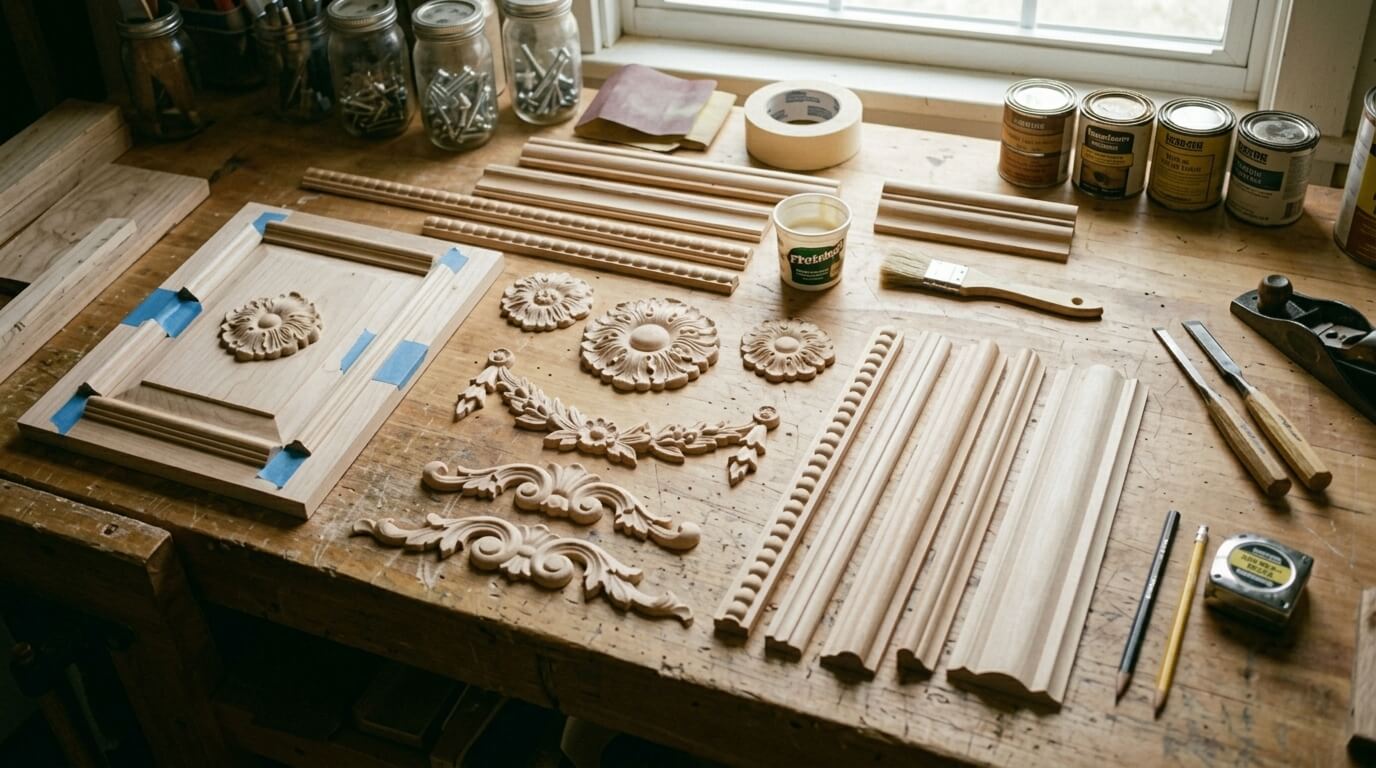
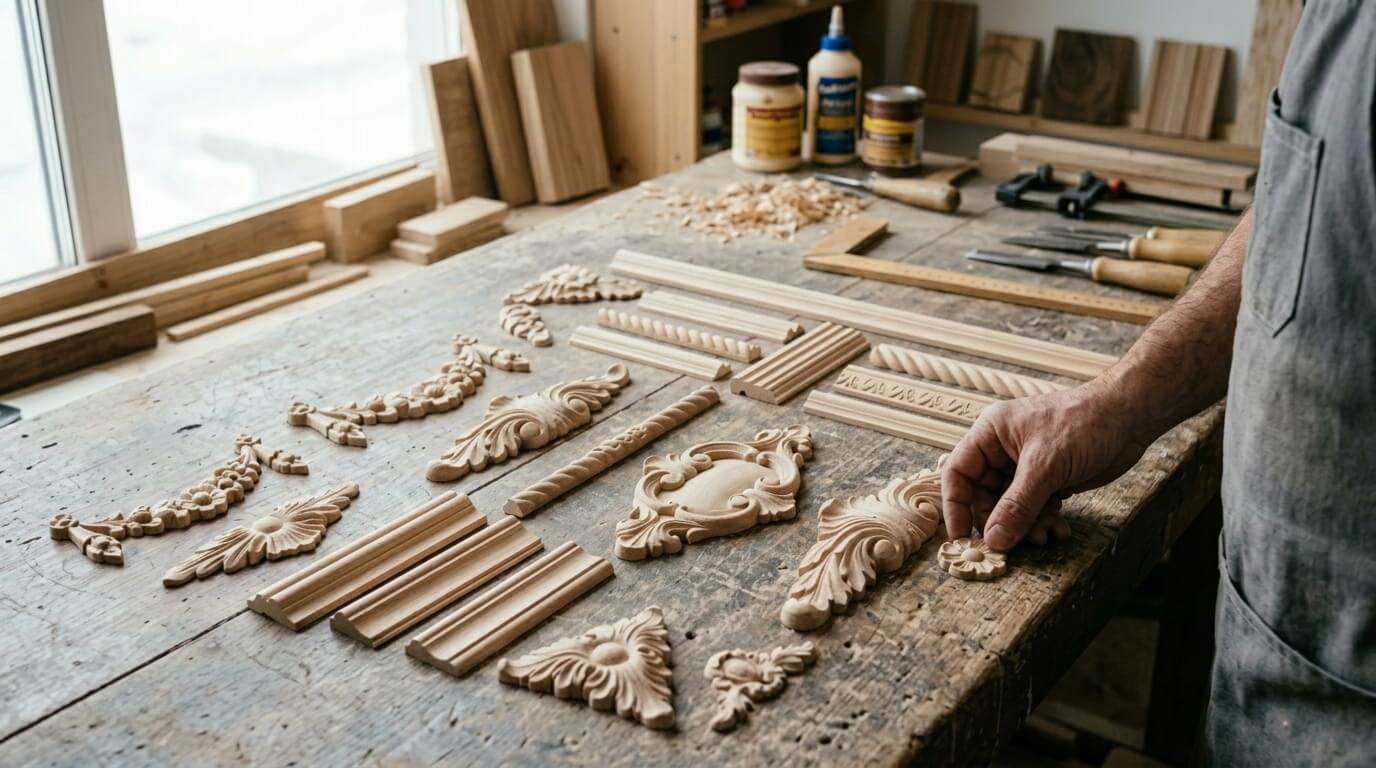
Wood appliques are pre-carved or pre-formed wood ornaments that you attach to furniture surfaces. Think of them as decorative patches that add depth, texture, and elegance. They come in dozens of shapes — flowers, scrolls, leaves, geometric patterns, and more.
Popular in American homes for over 200 years, appliques were once only available to the wealthy because craftsmen had to carve them by hand. Today, machine production has made them affordable and widely available online and in home improvement stores.
“The simplest furniture upgrade you can make is adding a wood applique. It costs less than $10 and adds $300 worth of visual value.” — Home Staging Expert
Understanding Decorative Wood Mouldings for Furniture
If appliques are the jewelry of furniture, decorative wood mouldings for furniture are the frame. Mouldings run along edges, borders, and panels to create a finished, polished look. They are long strips of shaped wood designed to transition between surfaces or highlight structural features.
Common types of decorative wood moulding for furniture include:
- Base cap moulding — adds a finished look to the bottom edge of a piece
- Dentil moulding — creates a row of square tooth-like blocks for a classic look
- Rope moulding — twisted pattern that adds texture to drawer fronts
- Egg-and-dart moulding — traditional pattern used in formal and colonial styles
- Bead moulding — simple rounded strip ideal for transitioning between panels
| Moulding Type | Best Used For |
| Base Cap | Bottom edges, drawer bases |
| Dentil | Cabinet tops, headboards |
| Rope | Drawer fronts, door panels |
| Egg-and-Dart | Formal dining pieces |
| Bead | Transitional edges, shelves |
| Crown | Top of armoires, hutches |
How to Use Decorative Wood Trim for Furniture
Decorative wood trim for furniture is broader than moulding. It includes flat strips, shaped rails, and panel inserts. While moulding focuses on edges, trim can cover entire surface panels to create a new look.
One popular technique is adding grid-pattern trim to a flat cabinet door. This makes a plain IKEA cabinet look like a high-end piece with multiple panels. It is the same trick used on expensive built-ins and custom cabinetry.
📝 Note: Before buying trim, measure your furniture carefully. Write down the exact dimensions of each surface you plan to cover. Buy 10-15% extra material to account for cuts and mistakes.
Decorative Wood Molding vs. Moulding: Is There a Difference?
You will see both spellings — decorative wood molding for furniture and moulding decorative wood trim for furniture. In American English, ‘molding’ is more common. ‘Moulding’ is the British spelling. Both refer to the same product. Manufacturers use both interchangeably, so do not get confused when shopping online.
Vintage Decorative Wood Appliques for Furniture
Vintage decorative wood appliques for furniture have seen a major comeback. Homeowners are using them to give modern furniture an antique or Victorian feel. These pieces typically feature more intricate carving details — acanthus leaves, shell motifs, and classical urns are popular choices.
Where to find vintage-style appliques:
- Specialty woodworking stores
- Online marketplaces like Etsy (from independent woodworkers)
- Home improvement chains like Lowe’s and Home Depot
- Architectural salvage shops
How to Install Wood Appliques and Mouldings: Step-by-Step
Step 1: Prepare the Surface
Sand the furniture surface lightly with 120-grit sandpaper. Clean away dust with a tack cloth. A clean surface ensures better adhesion.
Step 2: Dry Fit First
Hold the applique or moulding against the surface before applying any adhesive. Mark the position with a pencil.
Step 3: Apply Wood Glue or Construction Adhesive
Use wood glue for lighter appliques. For heavier mouldings, use construction adhesive. Apply evenly to the back of the piece.
Step 4: Press and Clamp
Press the piece firmly into position. Use painter’s tape or clamps to hold it in place while it dries (usually 2-4 hours for full cure).
Step 5: Fill Gaps and Sand
Use wood filler to fill any small gaps. Sand smooth once dry.
Step 6: Paint or Stain
Prime the applique and the surrounding furniture. Paint or stain to match or contrast your desired finish.
📝 Note: For a two-tone effect, paint the base furniture in one color and the applique in white or gold for a French Provincial look.
Pros and Cons of Using Wood Appliques and Mouldings
| Pros | Cons |
| Affordable upgrade (under $50 for most projects) | Requires patience and prep work |
| No special tools needed for basic installation | May crack if furniture flexes a lot |
| Completely reversible with some effort | Painting requires multiple coats |
| Huge variety of styles available | Difficult to remove cleanly on some finishes |
| Works on wood, MDF, and even some plastics | Low-quality versions may look cheap |
FAQs About Decorative Wood Mouldings and Appliques
Can I use wood appliques on painted furniture?
Yes. In fact, painted furniture is the most common surface for appliques. Just make sure the paint is fully cured before attaching anything.
What glue works best for wood appliques?
For most applications, regular wood glue works perfectly. For heavy mouldings or furniture that gets heavy use, use a strong construction adhesive like Liquid Nails.
How do I make wood appliques look like they are part of the original furniture?
The key is to caulk the edges, sand everything smooth, and apply a primer before painting. This eliminates visible seams and makes the applique look like it was always there.
Are decorative wood panels for furniture the same as moulding?
Not exactly. Panels are flat inserts added to furniture doors or sides to create a paneled look. Mouldings frame those panels. They are often used together for the best effect.
For more furniture decoration ideas and inspiration, explore our full furniture guide.
Key Takeaways
- Decorative wood appliques for furniture add ornamental details to flat surfaces
- Mouldings frame edges and create structure
- Wood trim covers panels and larger areas
- Installation is DIY-friendly with basic tools
- Vintage appliques are trending for a timeless look
- Always prep, prime, and paint for a seamless result
Whether you want to update a thrift store dresser or give your bedroom furniture a custom feel, decorative wood appliques, mouldings, and trim are among the most cost-effective tools available. Start small — one drawer front — and see the difference before committing to a full project.