
One of the most frequently asked questions in the world of beautiful interiors is a simple one: what is the actual difference between interior design vs decorating? Or interior design vs decoration? Or interior design versus interior decorating? The terms are used so interchangeably in everyday conversation that the distinction can feel academic. But for anyone making career decisions, hiring a professional, or studying the subject, understanding the real difference matters enormously.
Interior Design vs Decorating: The Essential Distinction
Here is the clearest way to think about interior design vs interior decorating:
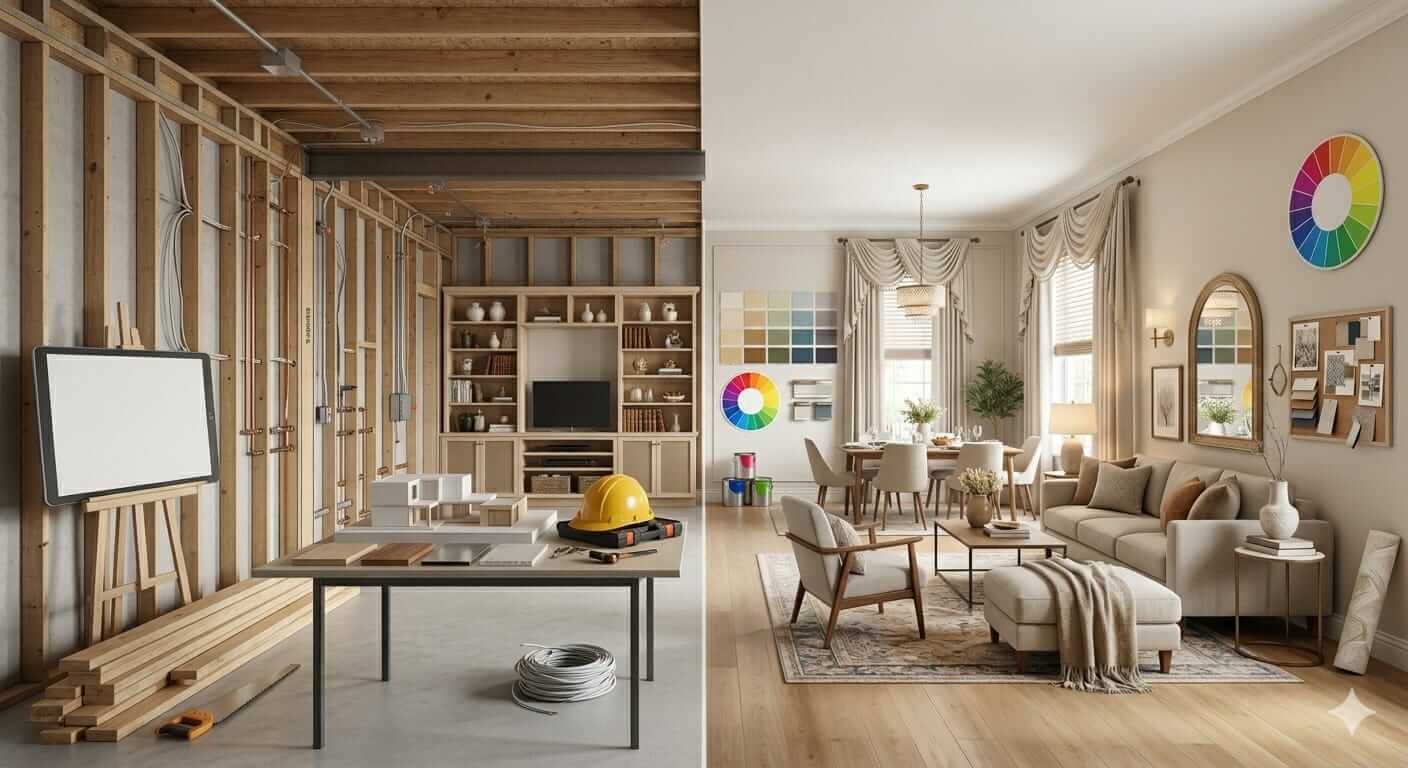
Interior design is the comprehensive discipline of creating functional, beautiful, and safe interior environments. It encompasses spatial analysis, architectural planning, lighting design, building code compliance, material specification, and the management of complex renovation or construction projects.
Interior decorating is the practice of making an existing space beautiful through the selection and arrangement of furniture, colour, textiles, art, lighting, and accessories. It does not typically involve structural changes or technical drawings.
The analogy that helps most people: interior design is like the writing and direction of a film. Interior decorating is like the costume design and set dressing. Both are essential to the final result, but they operate at different levels and require different skills.
Interior Design vs Decoration: A More Nuanced Look
Interior design vs decoration is sometimes framed as a hierarchy — design above decoration with decoration being somehow lesser. This is not accurate or helpful.
Interior decoration is a sophisticated and demanding discipline in its own right. A great decorator must understand colour theory at a deep level, have an encyclopaedic knowledge of furniture styles across history, be able to source and specify materials from around the world, understand how light interacts with different surfaces and finishes, and manage client relationships with empathy and skill.
What decoration does not require — and interior design does — is the technical knowledge to alter or work alongside architectural elements: moving walls, specifying structural columns, designing electrical layouts, or ensuring compliance with fire safety regulations in commercial spaces.
Interior design and decoration working together produce the best results. The most beautiful spaces are typically those where both the spatial design and the decorative layer have received equal care and expertise.
Interior Design and Interior Decoration: How They Overlap
In practice, interior design and interior decoration overlap considerably — particularly in residential work. Many interior designers offer a full decorating service as part of their practice. Many talented decorators have developed enough spatial knowledge to handle small-scale structural decisions.
The distinction becomes most important in:
- Commercial spaces: Where building codes, accessibility requirements, and occupancy regulations require licensed interior designers.
- New construction: Where spatial planning decisions must be made before any physical work begins.
- Complex renovations: Where structural changes, lighting design, and material specification require technical expertise.
For most straightforward home projects — redecorating a living room, furnishing a new apartment, styling a bedroom — a skilled interior decorator is exactly the right professional.
Interior Design Versus Interior Decorating: The Career Implications
If you are considering a career, understanding interior design versus interior decorating helps you choose the right educational pathway.
Studying interior design takes you towards:
- Residential and commercial design practice.
- Architectural and spatial planning.
- Design management and project coordination.
- Lighting design and specification.
- Sustainable design.
Studying interior decorating takes you towards:
- Residential decorating practice.
- Furniture and product specification.
- Colour consultancy.
- Home staging and property styling.
- Interior design content creation.
Neither path is superior — the right one depends on your strengths, your interests, and what aspects of the design process genuinely excite you.
Interior Design and Decorating Schools: Study Options
Whether you are drawn to the technical depth of interior design or the visual artistry of decorating, interior design and decorating schools offer programmes to match your ambitions.
University-Level Interior Design Programmes
Full degree programmes typically run three to four years and cover the full range of design skills — from technical drawing and CAD software to design theory, history, and business practice. Graduates are qualified to pursue registration with professional bodies and to work across both residential and commercial sectors.
Top schools include: Parsons School of Design, Rhode Island School of Design, KLC School of Design London, Ravensbourne University London, and RMIT in Australia.
Diploma and Certificate Programmes in Interior Decorating
One to two year programmes that focus on the decorating discipline: colour theory, furniture history, fabric and material specification, and project management. These are excellent for career changers who want practical, applied skills without committing to a four-year degree.
Short Courses and Online Learning
For those who want to improve their knowledge without a full qualification, short courses in colour theory, furniture styling, lighting design, and space planning are widely available. Platforms including Coursera, Skillshare, Udemy, and specific design schools offer accessible, well-structured programmes.
Choosing the Right School
Ask these questions before enrolling:
- Does the school produce graduates who are working successfully in the field?
- What does the portfolio produced during the programme look like?
- Are tutors currently practising designers?
- Does the school have industry connections — trade suppliers, design studios, graduate recruiters?
- What does the qualification allow you to do professionally?
FAQs
Is interior design harder to study than interior decorating?
Interior design is broader and more technical. It requires understanding of spatial planning, technical drawing, CAD software, and building codes alongside the aesthetic skills of decoration. Interior decorating is no less demanding creatively, but it does not require the same technical depth.
Can I do interior design vs decorating as a side business?
Many decorators run successful side businesses, particularly styling and staging work. Interior design is more difficult to practice part-time due to the complexity of client projects, but small-scale consultancy is possible.
Is interior design vs decoration a meaningful distinction for clients?
Yes. If your project involves structural changes, commercial regulations, or complex lighting design, you need an interior designer. If you need help making your existing space beautiful, a decorator is the right choice.