
Interior design and decorating is a profession, a passion, and for many people it is a way of life. Whether you are considering a career in the field, looking for fresh interior design ideas for home decor, or simply fascinated by the timeless appeal of interior design shabby chic decorating ideas, this guide covers the full picture — from choosing the right interior design and decorating schools to understanding the range of interior design and decorating jobs available today.
Interior Design or Interior Decoration: Choosing Your Path
Interior design or interior decoration — which should you pursue as a career or study area?
Interior design is the broader discipline. It covers space planning, structural changes, technical drawing, lighting specification, and material selection, as well as the aesthetics of decoration. Interior designers typically work on projects from the planning stage through to completion and can work on commercial as well as residential spaces.
Interior decoration focuses on the visual finishing of a space — furniture, textiles, colour palettes, art, and accessories. Decorators work primarily in residential settings and typically begin their work once the structural elements of a space are in place.
Interior design and decoration often overlaps in practice. Many practitioners offer services across both areas, particularly in residential work where the same person handles both the spatial planning and the styling.
The right choice depends on your interests. If you love drawing plans, solving spatial puzzles, and working with architects and builders, interior design is your path. If you love fabrics, furniture, colour, and styling, decoration is where you will thrive.
Interior Design and Decorating Jobs: What Careers Are Available?
The range of interior design and decorating jobs is broader than most people realise. Here is a look at the main career paths:
Residential Interior Designer
Works with homeowners and property developers to design living spaces. Projects range from single rooms to entire homes and new-build developments. Requires strong spatial design skills, client management, and project coordination.
Commercial Interior Designer
Designs offices, retail spaces, restaurants, hotels, healthcare facilities, and other commercial environments. This role often requires formal licensing and involves working within building codes and accessibility regulations.
Interior Decorator
Focuses on the visual styling of residential spaces. Selects and sources furniture, textiles, art, and accessories. Works within existing architectural frameworks.
Set Designer
Designs interiors for film, television, and theatre. A fascinating career that combines interior design principles with storytelling. Often requires understanding of period styles across history.
Visual Merchandiser
Applies interior design principles to retail environments. Manages how products are displayed and how the store space is laid out to drive sales and create brand experiences.
Interior Design Stylist / Home Stager
Styles homes for photography, sale, or rental. Works quickly and efficiently to maximise the visual appeal of spaces. Often works for estate agents, developers, or property photographers.
Interior Design Content Creator
Creates educational or inspirational content about interior design for social media, YouTube, podcasts, or blogs. A growing career area that combines design knowledge with communication skills.
Kitchen and Bathroom Designer
A specialist role focused on functional design of kitchens and bathrooms. Often works within a retail or manufacturing context.
Interior Design Lecturer / Tutor
Teaches interior design and decorating at colleges, universities, or through online platforms.
Interior Design Shabby Chic Decorating Ideas
Few styles in interior design and decoration are as beloved or as enduring as shabby chic. Developed in the 1980s by designer Rachel Ashwell, interior design shabby chic decorating ideas celebrate a beautiful, romantic, slightly imperfect aesthetic that mixes vintage, romantic, and country elements in a way that feels feminine, nostalgic, and deeply cosy.
What Is Shabby Chic?
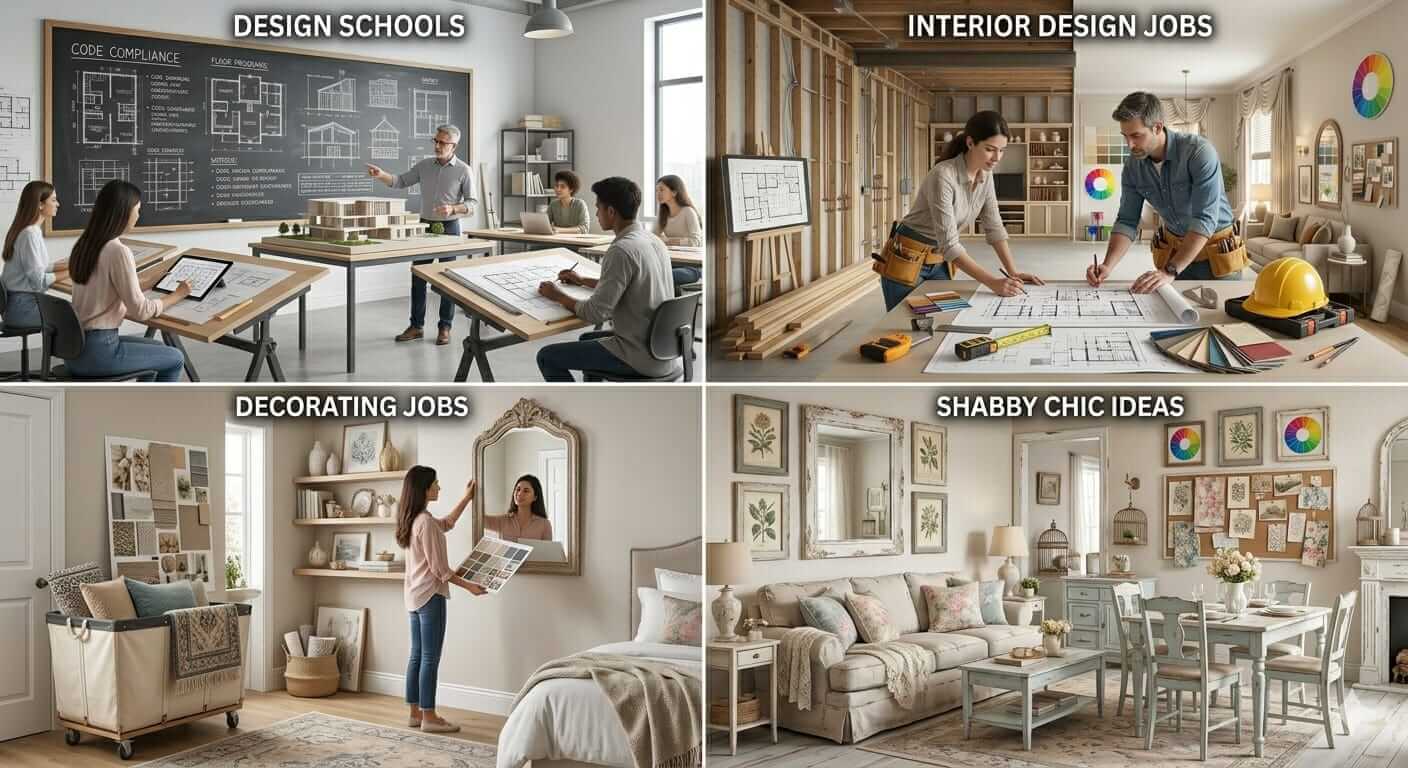
Shabby chic embraces the beauty of age. Distressed paint finishes, vintage furniture with peeling edges lace curtains, floral fabrics in soft pinks and whites, mismatched china, and an abundance of roses (real, dried, or printed) are all classic shabby chic elements.
The name itself captures the ethos: things that are a little worn, a little old, a little imperfect — and all the more charming for it.
Key Shabby Chic Decorating Ideas
Paint furniture in soft, chalky tones. White, pale grey, duck egg blue, and blush pink are the shabby chic palette. Chalk paint adheres easily to most surfaces and creates the perfect matte, slightly distressed finish.
Distress your painted surfaces. After painting, use fine sandpaper to gently wear away paint at edges and corners — where natural wear would occur. This creates an authentically aged look.
Seek out vintage and antique furniture. Car boot sales, antique fairs, and charity shops are the shabby chic designer’s playground. Look for pieces with beautiful bones — the paint or upholstery can always be updated.
Layer soft furnishings. Lace cushions, floral throws, embroidered pillowcases, and vintage quilts piled together create the layered comfort that is central to shabby chic style.
Use flowers generously. Roses in particular — in vases, in fabric patterns, in wallpaper — are the signature of shabby chic. Fresh flowers in mismatched vintage vases are the easiest and most effective shabby chic accessory.
Display collections. Vintage china, ironstone jugs, silver photograph frames, crystal decanters — displayed on open shelves or dressers, collections of beautiful old things are a core part of shabby chic decorating.
Interior Design Ideas for Home Decor: Practical Principles
Beyond any specific style, these interior design ideas for home decor apply universally:
Invest in what you touch. The sofa, the bed, the kitchen countertop — these are the elements you interact with physically every day. Invest the most here.
Art makes a home personal. Empty walls feel unfinished. Choose art that you genuinely love, not art that seems safe or appropriate. Original art from emerging artists is often more affordable than people expect.
Plants are always a good idea. A home with plants feels alive. Start with something easy — a pothos, a snake plant, or a ZZ plant — and build your confidence.
Smell matters as much as sight. A beautifully designed room that smells of damp or cooking is not beautiful. Scented candles, diffusers, fresh flowers, and good ventilation are non-negotiable elements of great home decor.
Change things seasonally. Your home does not need to stay the same all year. Swap cushion covers and throws as seasons change. Bring in seasonal flowers and natural materials. This keeps interiors feeling fresh without requiring a full redecoration.
Interior Design and Decorating Schools: Finding the Right One
Choosing between interior design and decorating schools is a significant decision. Consider these factors:
Qualification level: Do you want a degree, a diploma, or a short course? A degree takes longer and costs more but provides the deepest grounding and the broadest career options.
Mode of study: Full-time, part-time, or online? Online interior design and decorating schools have improved dramatically in quality and are a legitimate option for many learners.
Portfolio outcomes: What kind of work will you produce during the programme? Strong portfolio pieces are more important than the name on the certificate when it comes to getting clients or jobs.
Industry connections: The best schools have strong relationships with the design industry — manufacturers, studios, trade suppliers, and professional bodies.
Cost: Interior design education varies enormously in cost. Research grants, bursaries, and payment plans before ruling any programme out on financial grounds.
FAQs
What qualifications do I need for interior design and decorating jobs?
Requirements vary widely. Some decorating roles are open to those without formal qualifications but with a strong portfolio. Commercial interior design roles typically require a degree and may require professional licensing.
Is shabby chic still relevant in interior design?
Absolutely. Shabby chic remains a beloved style, particularly for country homes, cottages, and anyone who loves vintage and romantic aesthetics. It has evolved somewhat — a more refined, pared-back version is sometimes called “French country” style.
Can I become an interior decorator without formal training?
Yes. Many successful decorators are self-taught or have taken short courses. A strong portfolio, genuine design sensibility, and good business skills matter more than a formal qualification in the decorating world.