
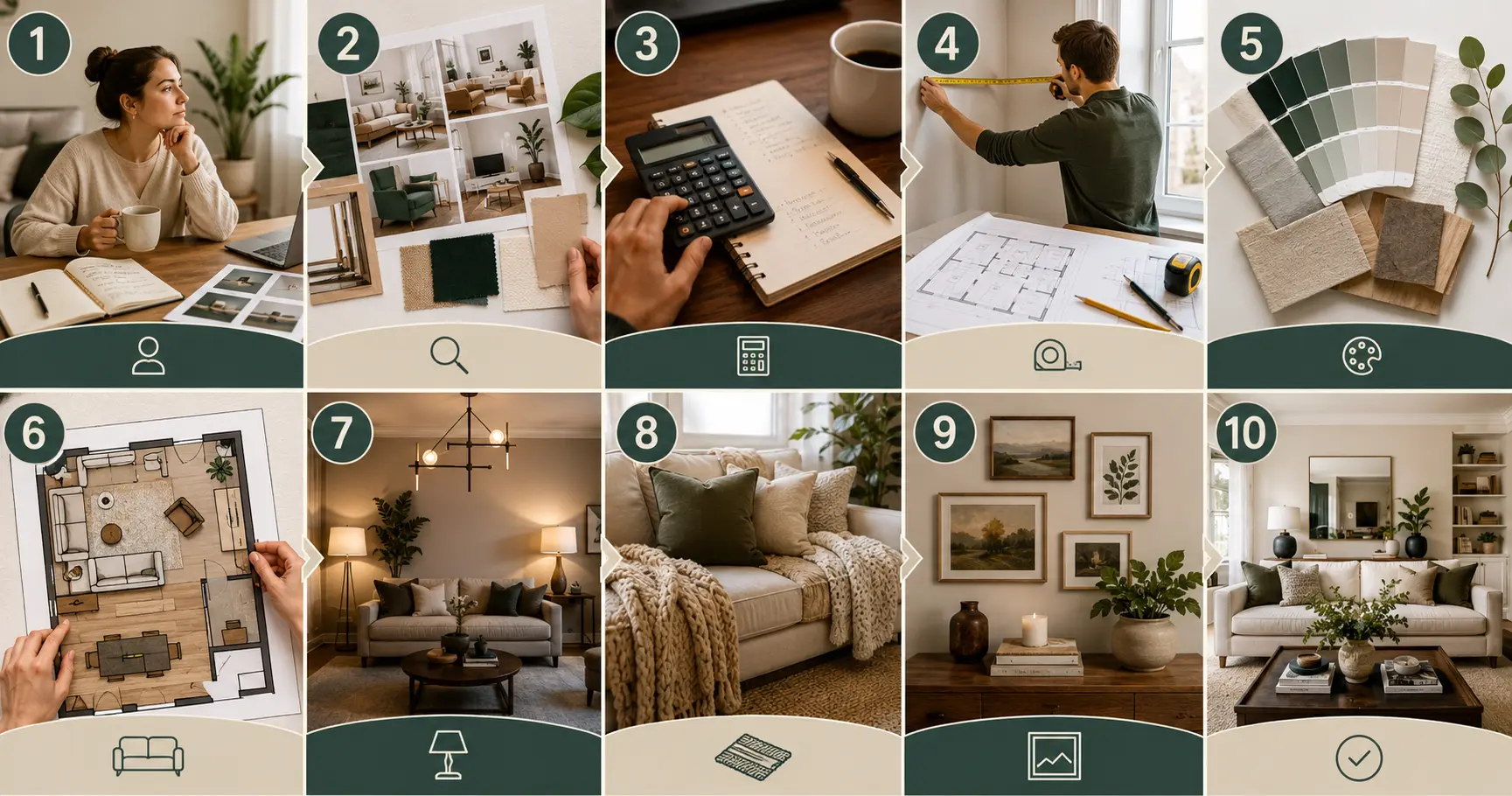

Whether you’re redoing your living room or designing an entire home, having a clear interior decorating process saves time, money, and stress. Most people dive straight into shopping — and then wonder why the room doesn’t feel right.
The truth is, great interior design follows a structured path. Here’s exactly how to approach it.
Step 1: Define Your Goals and Lifestyle
Before choosing a single paint color, ask yourself: What do I want this room to do? A family living room, a home office, and a formal dining room all serve different purposes — and need different approaches.
Think about:
- How many people use this space and how often?
- Do you need the room to be kid-friendly or pet-friendly?
- Is this a space for relaxing, entertaining, working, or all three?
- What’s your budget range?
Step 2: Research and Find Your Style
Browse Pinterest, Instagram, design magazines, and websites like home to discover what appeals to you. Save images consistently and look for patterns.
Common interior design styles in the US:
- Modern: Clean lines, minimal clutter, neutral palette
- Farmhouse: Wood textures, shiplap, warm whites
- Mid-century modern: Organic shapes, bold accents, functional furniture
- Traditional: Symmetry, rich colors, classic furniture forms
- Bohemian: Layered textiles, earthy tones, global accents
Step 3: Set Your Budget
Knowing your budget from the start keeps you focused. Break it down by category — furniture, paint, lighting, accessories, and labor (if applicable).
A general rule: spend the most on pieces you use every day (sofa, bed) and save on accessories (pillows, candles). You can always upgrade accessories later.
Step 4: Measure Everything
This step saves more headaches than any other. Measure your room dimensions, ceiling height, door and window locations, and any architectural features.
Create a simple floor plan — even on graph paper — to test furniture arrangements before buying anything. A sofa that’s too large for a room kills the entire design.
Step 5: Choose a Color Palette
Color sets the emotional tone of a room. Build your palette around:
- One dominant color (walls or large furniture)
- One secondary color (accent pieces, pillows, rugs)
- One or two neutrals (trim, ceiling)
For most American homes, a rule of 60-30-10 works well. 60% dominant color, 30% secondary, 10% accents.
Step 6: Plan Your Furniture Layout
Good furniture placement is about flow and function. Start with the largest piece (usually a sofa in living rooms or a bed in bedrooms) and build around it.
Layout principles:
- Keep traffic flow clear — at least 36 inches for walkways
- Float furniture away from walls for a more polished look
- Create conversation zones in large rooms
- Balance visual weight across the room
Step 7: Select Lighting Layers
Lighting is the most underestimated element in the interior decorating process. Layer three types:
- Ambient: Overhead fixtures for general illumination
- Task: Desk lamps, reading lights, under-cabinet lighting
- Accent: Wall sconces, picture lights, floor lamps
Great lighting transforms even a basic room into something that looks professionally designed.
Step 8: Layer Textiles and Textures
Textiles add warmth and softness. Layer rugs, throw pillows, curtains, and blankets to build visual richness. Mix textures — velvet, linen, cotton, and jute all work beautifully together.
For decor layering, use the rule of three: group items in odd numbers for a natural, organic look.
Step 9: Add Art and Accessories
This is the finishing layer. Art, plants, books, candles, and personal mementos complete the room and make it feel lived-in and personal.
Hang art at eye level — approximately 57 to 60 inches from the floor to the center of the piece. For gallery walls, lay out the arrangement on the floor before putting any nails in the wall.
Step 10: Edit and Refine
Great design isn’t about adding more — it’s about knowing when to stop. Once everything is in place, step back and assess. Remove anything that doesn’t serve the overall look or feel.
Many professional interior designers say editing is where the real magic happens. Less is almost always more.
Interior Decorating Process: Quick Reference Chart
| Step | Action | Time Investment |
| 1 | Define goals & lifestyle | 1-2 hours |
| 2 | Research styles | Ongoing |
| 3 | Set budget | 1 hour |
| 4 | Measure & floor plan | 2-3 hours |
| 5 | Choose color palette | 1-2 hours |
| 6 | Plan furniture layout | 2-4 hours |
| 7 | Select lighting | 1-2 hours |
| 8 | Layer textiles | Shopping + styling |
| 9 | Add art & accessories | Ongoing |
| 10 | Edit & refine | Ongoing |
FAQs: Interior Decorating Process
| Where should I start when decorating a room? | Start by defining how you’ll use the space and what style appeals to you. Then measure your room before buying anything. |
| How long does the interior decorating process take? | A single room can take anywhere from a few weeks to a few months depending on budget, availability of furniture, and complexity. |
| Do I need an interior designer? | Not necessarily. Many homeowners successfully decorate their own spaces using online resources and a clear process like this one. |
| How do I stick to a decorating budget? | Prioritize key pieces like a quality sofa or bed, and fill in with budget-friendly accessories. Avoid impulse buys. |
| What’s the most common decorating mistake? | Buying furniture before measuring the room. Always measure first. |
- Start with goals and lifestyle, not shopping
- Measure everything before buying furniture
- Build a cohesive color palette using the 60-30-10 rule
- Layer lighting for the most impact
- Edit ruthlessly — great design knows when to stop
Following a clear interior decorating process transforms how you approach any room. Instead of feeling overwhelmed, you’ll feel confident and creative. Explore more at home improvement for additional ideas and inspiration.