
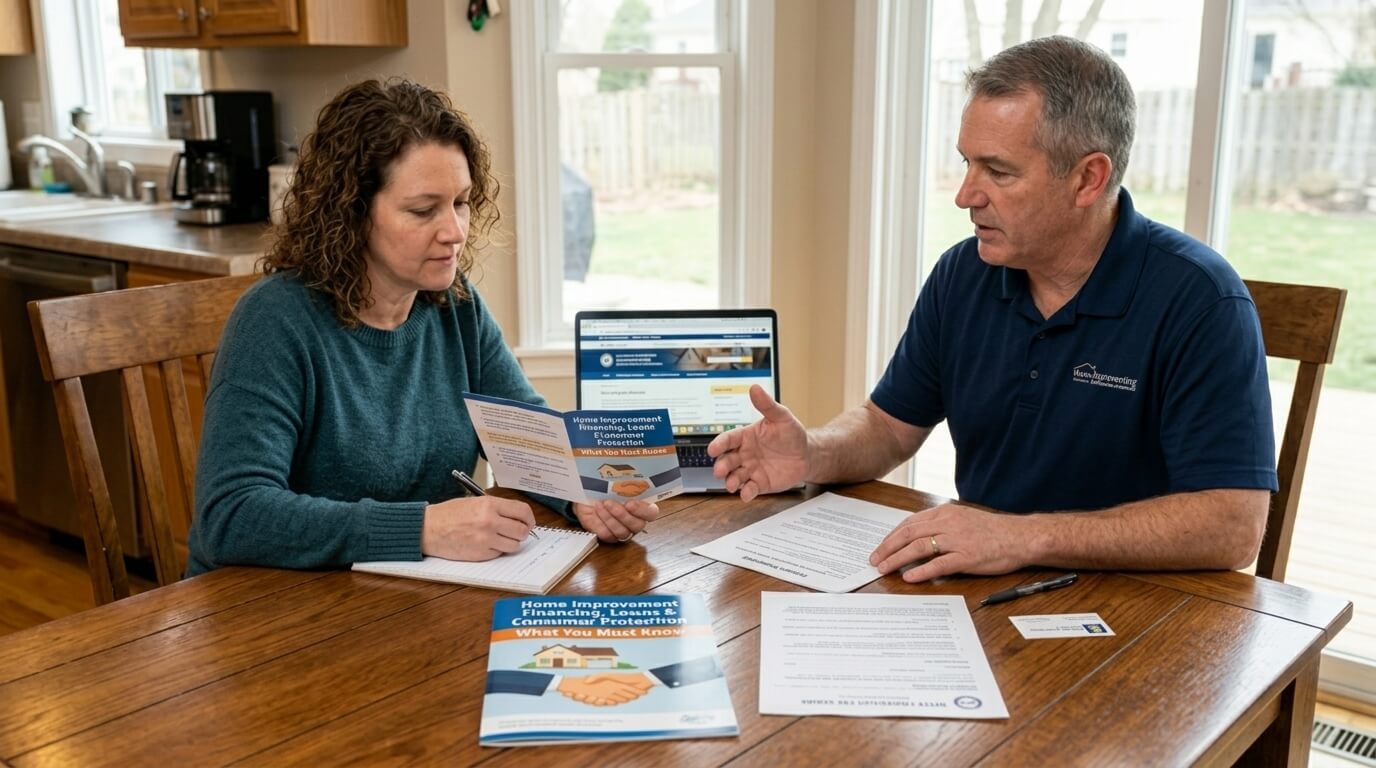

Whether you are a homeowner hiring a contractor or a professional starting a business, understanding licensing, bonding, and consumer protection rules is essential. This guide covers state-specific requirements and how these rules protect both parties.
Home Improvement Industry News: 2026 Trends
The home improvement industry news in 2026 shows continued growth, driven by aging housing stock, rising home values, and energy efficiency incentives. Key trends include:
- Increased demand for energy-efficient upgrades (heat pumps, insulation, solar)
- Rising material and labor costs pushing up average project budgets
- Greater regulatory scrutiny of unlicensed contractors in metro areas
- Consumer spending on home improvement remains above pre-pandemic levels
Home improvement spending news today confirms that despite economic uncertainty, homeowners continue investing in their properties at a high rate.
Why Contractor Licensing Matters
Licensing exists to protect homeowners from unqualified or fraudulent contractors. An unlicensed contractor may:
- Have no insurance, leaving homeowners liable for injuries on their property
- Fail to follow local building codes, creating safety hazards
- Disappear with deposits or leave projects incomplete
- Be unable to obtain required permits
Most states require a home improvement contractor license for any project above a minimum dollar threshold.
Nassau County Home Improvement License (New York)
Nassau home improvement license requirements are among the strictest in New York state. To work as a contractor in Nassau County, you must:
- Submit a completed Nassau County home improvement license application to the Nassau County Office of Consumer Affairs
- Provide proof of liability insurance and workers’ compensation
- Pass a background check
- Pay the required application and license fees
- Show proof of business registration
The home improvement license Nassau County NY must be renewed annually. Operating without one can result in fines of up to $10,000.
Westchester County Home Improvement License (New York)
Home improvement license Westchester is issued by the Westchester County Department of Consumer Protection. Requirements include:
- Completion of a Westchester-specific contractor application
- Proof of general liability insurance (minimum $1,000,000 per occurrence)
- Proof of workers’ compensation and disability coverage
- Payment of a license fee
Unlike Nassau, Westchester does not require a written exam, but verifies all documentation carefully.
Maryland Home Improvement License
Maryland home improvement license test candidates must pass the Maryland Contractor Licensing exam administered by the Maryland Home Improvement Commission (MHIC). The exam covers:
- Contract law and consumer protection requirements
- Business practices and ethics
- Building codes and permit requirements
- Project planning and safety standards
Common home improvement license test questions in Maryland cover contract cancellation rights, required contract clauses, lien laws, and escrow requirements for deposits.
New Jersey Home Improvement Contractor Bond
The nj home improvement contractor bond is a prerequisite for registration with the New Jersey Division of Consumer Affairs. All registered contractors must maintain:
- A surety bond of at least $10,000 (for home improvement contractors)
- General liability insurance of at least $500,000
- Workers’ compensation coverage if employing workers
New Jersey law prohibits any person from engaging in home improvement without registration. Violations can result in fines and civil liability to affected homeowners.
Home Improvement Consumer Protection Act
The home improvement consumer protection act exists in various forms across states. Generally, these laws require:
- Written contracts for projects above a minimum amount (often $500)
- Contract contents — start and completion dates, scope of work, payment schedule, and contractor license number
- Right to cancel — homeowners typically have 3 business days to cancel
- Deposit limits — many states cap deposits at 10–30% of total contract value
- Lien rights disclosure — contractors must inform homeowners about potential mechanic’s liens
Pennsylvania Home Improvement Consumer Protection Act (HICPA)
The Pennsylvania home improvement consumer protection act (HICPA) requires all home improvement contractors to register with the Attorney General’s office. Key provisions:
- Contractors must have a valid PA registration number
- Contracts must include contractor registration number and all required details
- Violations can result in criminal charges and civil liability
- Homeowners can check registration status online through the AG’s database
How to Verify a Contractor’s License
Before hiring any contractor, homeowners should always verify:
- State license status — Search your state’s contractor licensing database
- Insurance certificates — Request a certificate of insurance naming you as additional insured
- Business reviews — Check Google, Angi, and Better Business Bureau
- Permit history — Your local building department can confirm if the contractor pulls proper permits
- References — Ask for three recent client references and actually call them
Key Takeaways
- Nassau home improvement license and Westchester license requirements include insurance, background check, and annual renewal
- Maryland home improvement license test covers law, contracts, and safety
- NJ home improvement contractor bond protects consumers and is legally required
- Home improvement consumer protection act laws mandate written contracts and cancellation rights
FAQs
Do I need a license to do home improvement in New York?
Yes. Nassau County, Westchester, and New York City all have their own licensing requirements. State law also requires licensing for certain trades regardless of county.
What happens if a contractor works without a license?
Unlicensed contractors can face fines, criminal charges, and are typically ineligible to use lien rights to collect payment. Homeowners may also face insurance and permit complications.
How do I apply for a Nassau County home improvement license?
Submit a completed Nassau County home improvement license application to the Nassau County Office of Consumer Affairs with proof of insurance, identification, and payment of the required fee.