
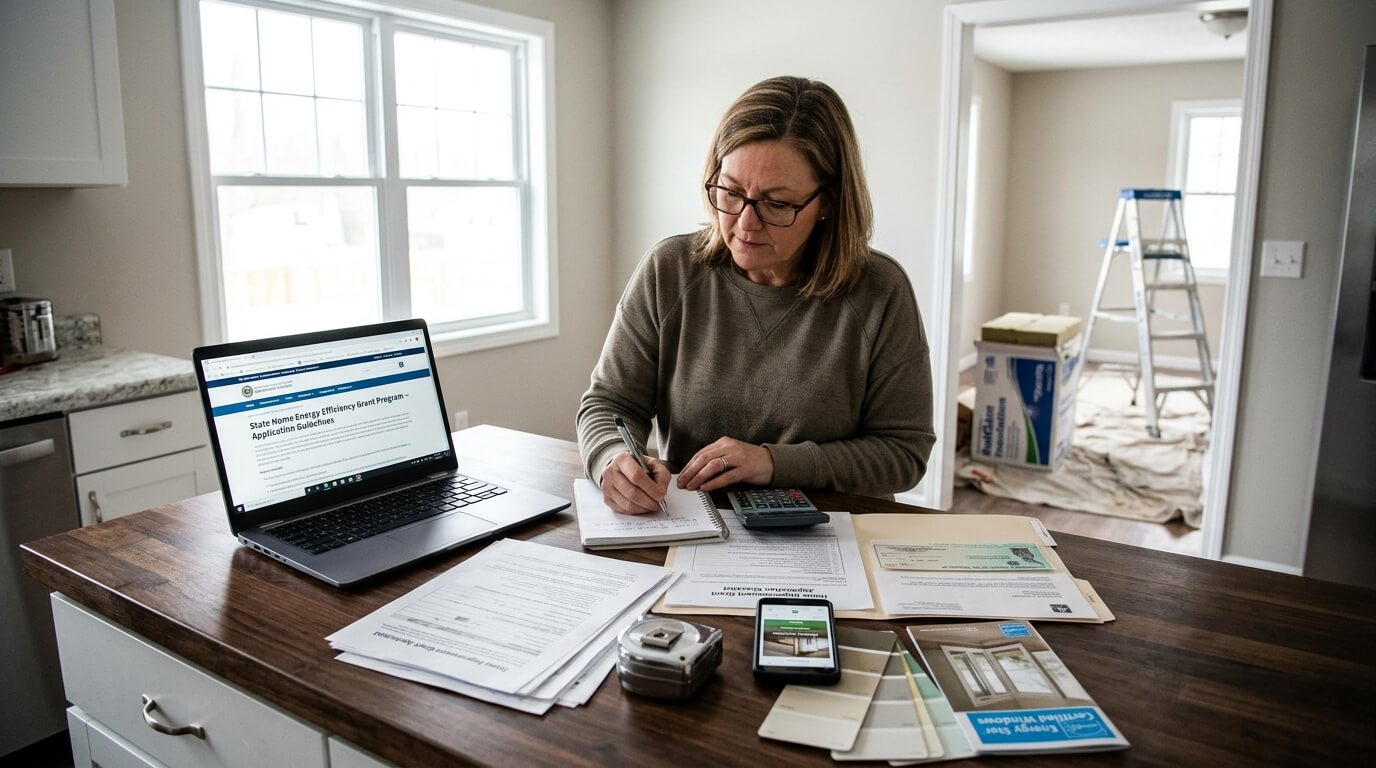

Did You Know the Government May Pay for Your Home Repairs?
Many homeowners spend thousands every year on repairs — not knowing that home improvement grants exist to help cover those costs. Whether you need a new roof, updated plumbing, or energy-efficient windows, grant money for home improvements could reduce or even eliminate your out-of-pocket expenses. This guide breaks down everything you need to know: what programs exist, who qualifies, and how to find a $10,000 grant for home improvement near me.
What Are Home Improvement Grants?
A home improvement grant is money given to homeowners that does not need to be repaid. These funds come from federal government agencies such as HUD and USDA, state and local governments, nonprofit organizations, and utility companies offering energy-saving upgrade incentives. Most programs target low-to-moderate income homeowners, seniors, veterans, and people with disabilities.
Who Is Eligible for a Government Home Improvement Grant?
Understanding who is eligible for a government home improvement grant is your first step. Eligibility generally depends on the following factors:
- Income level — most programs serve households earning below 80% of the area’s median income
- Homeownership status — you must own and live in the home as your primary residence
- Property condition — the home must need repairs that affect health or safety
- Location — rural areas may qualify for USDA programs; cities have local CDBG options
- Age or disability — some grants are specifically for seniors aged 62 and above
Top Federal Programs Offering a $10,000 Grant for Home Improvement
1. USDA Section 504 Home Repair Program
This is one of the most well-known federal sources of grants for home improvement It provides up to $10,000 in grant money for low-income rural homeowners aged 62 or older. Funds can be used to remove health and safety hazards from the home.
2. HUD Community Development Block Grants (CDBG)
The U.S. Department of Housing and Urban Development distributes these funds to local governments. Cities then create their own home improvement grant programs for low-income residents.
3. Weatherization Assistance Program (WAP)
This Department of Energy program helps eligible families improve energy efficiency — covering insulation, window sealing, and furnace upgrades at no cost to the homeowner.
4. Low Income Home Energy Assistance Program (LIHEAP)
While primarily an energy bill program, LIHEAP sometimes funds minor home improvement repairs related to heating and cooling systems.
State-Specific Grant Opportunities
| State | Program | Typical Grant | Who Qualifies |
| California | CalHFA + Local CDBG | Up to $10,000–$40,000 | Low-income homeowners |
| Georgia | Georgia DCA Programs | Up to $5,000–$10,000 | Low-to-moderate income |
| Texas | TSAHC Programs | Up to $10,000 | Income-qualified owners |
| All States | USDA Section 504 | Up to $10,000 | Rural, age 62+, low income |
If you are searching for a $10,000 grant for home improvement California, the state’s CalHFA programs combined with local community block grants can be a strong option. For a $10,000 grant for home improvement Georgia or a $10,000 grant for home improvement Texas, start with your state’s housing finance agency website.
How to Apply for Home Improvement Grants — Step-by-Step
- Identify your income level — compare your household income to the Area Median Income (AMI) for your location
- Search local programs — visit your city or county website and search for ‘home improvement assistance’
- Contact HUD-approved housing agencies — they connect you with local home improvement grant programs
- Gather documents — income proof, tax returns, homeownership documents, and repair cost estimates
- Submit applications early — many programs have limited funding and close quickly
- Follow up — check your application status regularly throughout the review period
Other Ways to Fund Home Improvements When Grants Are Not Available
If you do not qualify for a grant right now, consider these alternatives. A 2nd mortgage for home improvements lets you borrow against your home’s equity at relatively low rates. Another option is a 401k loan for home improvement, though this comes with tax implications and should be used as a last resort. Personal loans and home equity lines of credit are also popular choices.
KEY TAKEAWAYS:
- Federal programs like USDA Section 504 offer up to $10,000 in home improvement grants for eligible seniors
- Income, location, and homeownership status are the main eligibility factors
- State programs in California, Georgia, and Texas have dedicated grant opportunities
- Start your search at HUD.gov or your local housing authority website
Frequently Asked Questions
Q: Can I get a $10,000 grant for home improvement anywhere in the U.S.?
Yes, but availability depends on your location, income, and the specific program. The USDA Section 504 program is available in rural areas nationwide, while other programs are state or city-specific.
Q: Do home improvement grants have to be paid back?
True grants do not need to be repaid. However, some programs may require you to live in the home for 3 to 5 years or the money converts to a low-interest loan.
Q: How long does it take to receive a home improvement grant?
The timeline varies. Some local programs process applications in 4 to 8 weeks, while federal programs can take several months. Apply as early as possible.
Q: Are home improvement grants taxable income?
In most cases, government home improvement grants are not taxable if used for eligible repairs. Always consult a tax professional to confirm based on your specific grant program.