
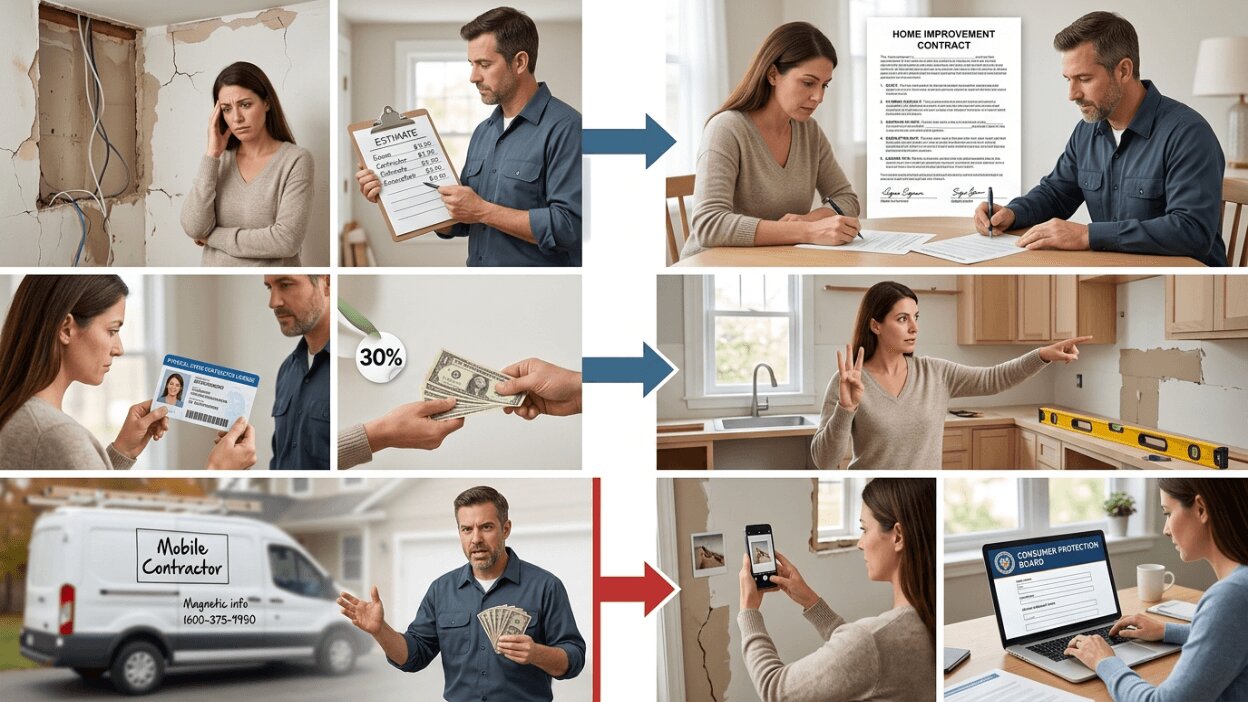

Home renovation projects represent some of the largest financial decisions many families make. Unfortunately, contractor fraud and disputes are all too common. The home improvement consumer protection act exists to level the playing field — giving homeowners clear rights and recourse when things go wrong.
If you’re planning a renovation, understanding the home improvement consumer protection act isn’t just smart — it could save you thousands of dollars and significant legal headaches.
What Is the Home Improvement Consumer Protection Act?
The home improvement consumer protection act (HICPA) is legislation designed to regulate the relationship between homeowners and contractors. It sets minimum standards for contracts, licensing, financial disclosures, and dispute resolution.
While specifics vary by state, the core protections are consistent: homeowners have the right to written contracts, licensed contractors, clear payment schedules, and defined project timelines. Contractors who violate these standards can face penalties, license revocation, and civil liability.
Before starting any renovation, make sure you’re also familiar with general Home Improvement best practices to complement your legal knowledge.
Key Provisions of the Home Improvement Consumer Protection Act
Written Contracts Required
Under the home improvement consumer protection act, any project exceeding a threshold amount (typically $500–$1,000 depending on the state) must be covered by a written contract. This contract must include:
- A clear description of the work to be performed
- Materials to be used (brand, grade, quantity)
- Total contract price and payment schedule
- Estimated start and completion dates
- Contractor’s name, address, and license number
- Homeowner’s right to cancel within a specified period
Licensing Requirements
The consumer protection act for home improvement requires contractors to be properly licensed in their state. Working with an unlicensed contractor voids your legal protections in many jurisdictions — always verify licensing before signing anything.
Deposit Limitations
Many states cap the upfront deposit a contractor can require — often at 30–33% of the total contract price. This prevents contractors from collecting large sums and then abandoning projects.
Your Rights as a Homeowner
The home improvement consumer protection act gives you specific rights throughout the project:
- The right to a written copy of the signed contract before work begins
- The right to cancel within three business days of signing (the “cooling off” period)
- The right to inspect all work and withhold payment for unsatisfactory completion
- The right to file a complaint with your state’s contractor licensing board
- The right to pursue damages in small claims or civil court
Understanding these rights is as important as knowing your design preferences. Explore interior decoration ideas that you can protect legally once you know your rights.
Red Flags to Watch for Before Signing
The home improvement consumer protection act can only protect you if you exercise your rights. Watch for these warning signs before hiring:
- Pressure to sign immediately or start work without a written contract
- Requests for full payment upfront
- No physical business address or verifiable license number
- Unusually low bids that seem too good to be true
- Reluctance to provide references or proof of insurance
What to Do If a Contractor Violates the Act
Document Everything
Keep copies of all contracts, receipts, and correspondence. Take dated photos of work in progress. This documentation is essential if you need to file a complaint or pursue legal action.
File a Complaint
Report violations to your state’s contractor licensing board or consumer protection office. The home improvement consumer protection act gives these agencies authority to investigate, fine, and revoke licenses.
Seek Legal Remedies
If the contractor refuses to remedy the situation, you may be entitled to cancel the contract, recover payments, and receive additional damages. Consult a consumer protection attorney for complex cases.
How the Act Applies to Different Projects
The home improvement consumer protection act covers a broad range of projects, including:
- Kitchen and bathroom remodels
- Roofing, siding, and window replacement
- Additions and structural changes
- HVAC installation and replacement
- Landscaping and outdoor structures
Whether you’re planning exterior decoration improvements or a full interior remodel, the Act’s protections apply.
FAQs About the Home Improvement Consumer Protection Act
Does the Act apply to all states?
Similar laws exist across all states, but the specific provisions vary. Some states have very detailed regulations; others are more general. Always check your state’s specific rules.
What if the contractor is from another state?
In most cases, the law of the state where the work is performed applies. The contractor must be licensed in that state.
Can I waive my rights under the Act?
No. The home improvement consumer protection act rights are generally non-waivable. Any contract clause that attempts to eliminate these rights is typically unenforceable.
Final Thoughts
The home improvement consumer protection act is one of the most important tools in any homeowner’s legal toolkit. It doesn’t just protect you from fraud — it creates a framework for fair, professional contractor relationships.
Before your next renovation, take the time to understand your rights. Then partner with a licensed, reputable contractor and enjoy the peace of mind that comes from knowing you’re protected every step of the way.