
If you have a passion for beautiful spaces and a natural eye for color and style, a career in interior decoration might be exactly the right path for you.
Formal education can accelerate your journey. Understanding what a diploma program involves, whether certification is necessary, and how the industry works will help you make smarter decisions about your future.
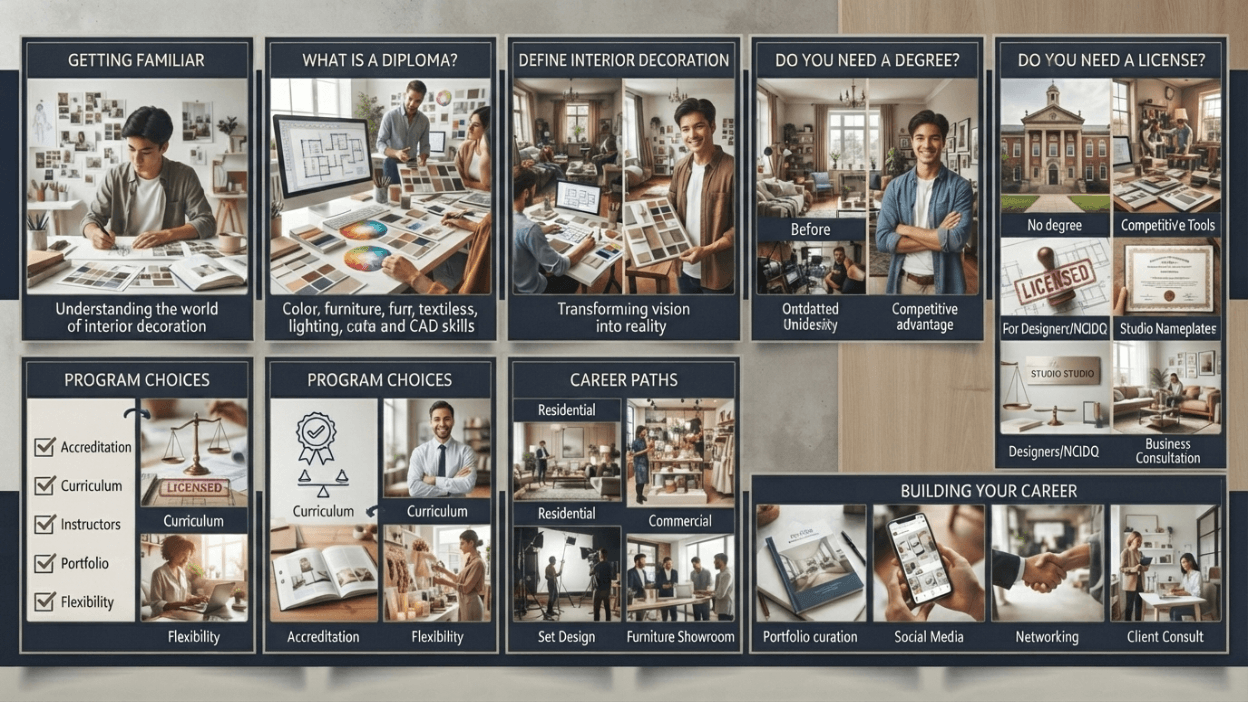
Start by getting familiar with the world of interior decoration to understand the field you are entering.
What Is a Diploma in Interior Decoration?
Diploma in interior decoration programs are structured courses that teach the fundamentals of interior design and decoration. They are shorter and more focused than a four-year bachelor’s degree, making them an accessible entry point for many students.
A typical diploma program covers:
- Color theory and how colors interact in a space
- Furniture selection and arrangement principles
- Textiles, materials, and finishes
- Lighting design basics
- Client communication and project management
- CAD software and presentation skills
Most programs can be completed in one to two years, either in person or online.
Define Interior Decoration: Understanding the Field
Before choosing a program, it helps to define interior decoration clearly. The definition of interior decoration is the art and practice of improving the interior of a space to create a more aesthetically pleasing and functional environment.
Design interior decoration programs teach both the artistic and practical sides of this work. You learn how to translate a client’s vision into a real, livable space.
Explore Home Improvement principles alongside your studies to gain practical context for what real renovation projects involve.
Do You Need a Degree to Be an Interior Decorator?
One of the most common questions from aspiring decorators is: do you need a degree to be an interior decorator? The clear answer is no, you do not.
Unlike architects or engineers, interior decorators are not required to hold a university degree in most countries. Many successful decorators are self-taught or have completed short certificate programs.
However, formal education — like a diploma — gives you a competitive advantage. It teaches structured design thinking, professional practices, and technical skills that are harder to pick up on your own.
Do You Need a License to Be an Interior Decorator?
Do you need a license to be an interior decorator? In most countries and states, the answer is no. Decorating is not a licensed profession in the way that architecture or engineering is.
However, interior designers — as opposed to decorators — may need to pass a professional exam and hold a license, especially in the United States where the NCIDQ certification is the industry standard.
If you plan to expand into full interior design work that involves structural changes or building code compliance, pursuing additional certification later is a smart move.
What to Look for in an Interior Decoration Diploma Program
Not all diploma programs are equal. Here is what to look for when choosing yours:
- Accreditation: Choose a program recognized by industry bodies.
- Curriculum: Look for a balance of theory, software, and practical projects.
- Instructors: Experienced industry professionals make the best teachers.
- Portfolio building: Programs should help you build a professional portfolio.
- Flexibility: Online options are ideal if you are studying while working.
Expanding your knowledge into related areas like Kitchen Decoration and Garden Decorations can broaden your professional skill set.
Career Paths After a Diploma in Interior Decoration
A diploma in interior decoration opens many doors. Here are some careers you might pursue:
- Residential interior decorator
- Commercial staging specialist
- Set designer for film or television
- Visual merchandiser for retail stores
- Furniture showroom consultant
- Online interior decoration advisor
Many decorators eventually launch their own business, offering consultations, full-service decoration, and online design packages.
Building Your Career in Interior Decoration
Education is just the beginning. Building a successful career in this field requires:
- A strong, curated portfolio of real or practice projects
- Active presence on social media platforms like Instagram and Pinterest
- Networking with real estate agents, contractors, and furniture suppliers
- Taking on smaller projects initially to build experience and testimonials
As your portfolio grows, explore exterior decoration services too, since many clients want comprehensive design help both inside and out.
Frequently Asked Questions
How long does a diploma in interior decoration take?
Diploma in interior decoration programs typically take one to two years full-time. Part-time or online options may take longer.
Can I become an interior decorator without any formal training?
Yes, but formal training gives you a structured foundation, professional credibility, and technical skills that accelerate your career significantly.
What is the difference between interior decoration and interior design?
The definition of interior decoration focuses on aesthetics and furnishing. Interior design is a broader profession that includes architectural planning, spatial design, and often requires formal licensing.