
Small hardware details make a bigger difference than most homeowners expect. A plain garage door, a bare wooden post, or a piece of furniture without character can all be transformed with the right metal accents. This guide covers the most popular categories of decorative metal hardware and how to use each one effectively around your home.
Decorative Garage Door Hardware
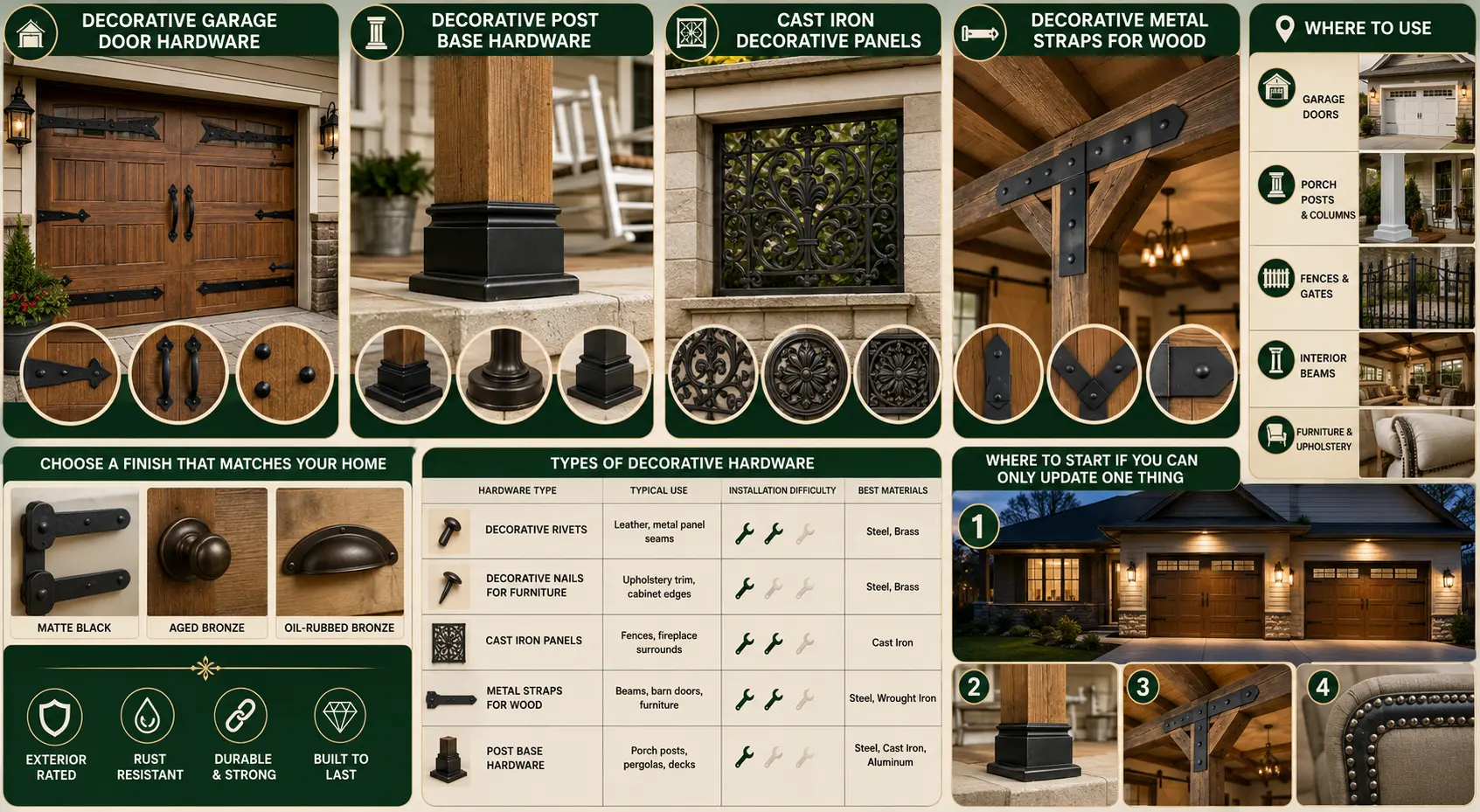
Decorative garage door hardware includes faux handles, hinge straps, and clavos that mount directly onto a standard garage door to mimic the look of a custom carriage-style door. This is one of the most cost-effective curb appeal upgrades a homeowner can make, often costing a fraction of a full door replacement.
- Faux hinge straps add dimension without functioning as real hinges
- Handle sets create a carriage-door look on a standard panel door
- Most kits use exterior-rated screws or magnets for easy installation
- Available in black, bronze, and oil-rubbed finishes to match trim
This is a popular finishing touch for anyone updating their exterior design, since it pairs naturally with new house numbers, light fixtures, or a repainted front door.
Decorative Post Base Hardware
A decorative post base covers the unfinished bottom of a wooden porch or deck post, hiding the raw wood-to-concrete connection while adding a more finished, architectural look. These are especially popular on farmhouse-style porches and pergolas.
Common Post Base Styles
- Square wrap-around bases for porch columns
- Decorative cast bases for round or tapered posts
- Adjustable trim rings for uneven concrete footings
Cast Iron Decorative Panels
Cast iron decorative panels are used for everything from fence inserts to fireplace surrounds. Their weight and rigidity make them a long-term investment; unlike lighter metals, cast iron holds intricate detail well and resists warping, though it does require occasional rust prevention if used outdoors.
- Clean the panel with a dry brush before applying any protective coating.
- Use a rust-inhibiting primer if the panel will be installed outdoors.
- Mount with corrosion-resistant screws to avoid streaking over time.
- Reapply a clear protective sealant every 12–18 months in humid climates.
Decorative Metal Straps for Wood
Decorative metal straps for wood are commonly used on beams, doors, and furniture to create an industrial or rustic farmhouse look. They’re typically made from steel or wrought iron and can be purely decorative or load-bearing, depending on the gauge of metal used.
If you’re working on a larger renovation, straps like these are a small but effective way to tie a room together. Many homeowners pair them with other home improvement upgrades like exposed beams or barn-style doors.
Decorative Rivets and Furniture Nails
Both decorative rivets and decorative nails for furniture serve a similar purpose: adding texture and a handcrafted look to upholstery, cabinetry, and trim work. Rivets are typically used where two metal or leather pieces overlap, while decorative furniture nails are hammered along fabric edges, such as the border of an upholstered headboard or ottoman.
| Hardware Type | Typical Use | Installation Difficulty |
| Decorative rivets | Leather, metal panel seams | Moderate — needs a rivet tool |
| Decorative furniture nails | Upholstery trim, cabinet edges | Easy — hammer or nail gun |
| Cast iron panels | Fences, fireplace surrounds | Moderate to advanced |
| Metal straps for wood | Beams, barn doors, furniture | Easy to moderate |
Choosing a Finish That Matches Your Home
Metal hardware finish should echo other fixtures already in the space — door handles, light fixtures, and cabinet pulls. Matte black and aged bronze are currently the most popular finishes for both interior and exterior hardware, since they hide fingerprints and blend with most color palettes. When shopping for pieces to complete a room, browse a few options side by side in our decor collection before committing to a finish.
Where to Start If You’re Only Updating One Thing
If budget or time only allows for one hardware update this year, the garage door is usually the highest-impact choice. It’s one of the largest visible surfaces on most home exteriors, and a hardware kit takes an afternoon rather than a weekend. From there, post bases and metal straps are the next most noticeable upgrades, since porches and beams tend to draw the eye immediately upon approach.
Furniture-level details like rivets and decorative nails make the biggest difference in smaller spaces — a reading nook, an entryway bench — where the item is seen up close rather than from across a room or yard.
Frequently Asked Questions
Is decorative garage door hardware weatherproof?
Most kits are designed for exterior use and made from rust-resistant metals or coated finishes, but it’s worth checking the product description for a specific weather rating before buying.
Do decorative post bases require professional installation?
No. Most wrap-around and cast bases are designed for a simple DIY install using basic screws or adhesive, though very heavy cast iron bases may benefit from a second set of hands.
Can decorative rivets be used without a rivet gun?
Small decorative rivets can sometimes be set with a hammer and anvil, but a basic rivet tool gives a cleaner, more secure result for most home projects.
How do I prevent rust on outdoor metal hardware?
Apply a rust-inhibiting primer or clear coat before installation, and reapply every year or two depending on your climate and how much direct rain or humidity the piece is exposed to.
How to Match Hardware Across an Entire Project
One of the most common design mistakes homeowners make is buying decorative hardware piece by piece without a plan. A garage door handle set in oil-rubbed bronze can clash badly with matte black porch hardware if they’re installed side by side. Before ordering anything, it helps to pick one finish family — black, bronze, or brushed nickel — and stick with it across the whole exterior of the home, from the mailbox to the front door to the garage.
The same logic applies indoors. If you’re adding decorative rivets to a leather ottoman and decorative nails for furniture to a headboard in the same room, choosing a matching metal tone ties the pieces together, even if the furniture styles themselves are different.
Installation Tools You’ll Actually Need
- A cordless drill with a magnetic bit holder for garage door hardware kits
- A rubber mallet for setting post base wraps without denting the metal
- A basic rivet setter for leather or fabric rivet work
- A stud finder if mounting heavier cast iron panels to drywall
- Exterior-rated caulk to seal gaps around post bases in wet climates
Most of these tools are already sitting in a typical homeowner’s garage, which is part of why decorative hardware projects are so approachable compared to a full renovation. Even a cast iron panel installation, which sounds intimidating, usually comes down to a few pre-drilled mounting holes and a couple of hours on a Saturday.
Signs It’s Time to Replace Old Hardware
Rust bleeding through paint, loose screws that no longer tighten, or a finish that’s worn down to bare metal are all signs that existing hardware needs to be replaced rather than touched up. Trying to paint over heavily rusted cast iron decorative panels usually looks worse within a year, since rust continues to spread underneath a fresh coat of paint. In these cases, it’s more cost-effective to replace the piece entirely with a new, properly primed panel.
Indoor Uses You May Not Have Considered
While much of this hardware is associated with exteriors, several categories work just as well indoors. Small cast panels can be inset into cabinet doors for a custom, furniture-grade look. Metal straps originally designed for beams are often repurposed as floating shelf brackets. And decorative rivets, usually seen on leather furniture, show up increasingly on statement light fixtures and pendant shades.
Thinking beyond the obvious use case for each hardware type is a simple way to get more value out of a single purchase, and it often results in a more original, less catalog-matched look throughout the home.
Key Summary
- Decorative garage door hardware is one of the most affordable curb appeal upgrades available.
- Post bases and metal straps add architectural detail to porches, beams, and furniture.
- Cast iron panels last for decades but need occasional rust prevention outdoors.
- Matching finishes across all hardware creates a more polished, intentional look.
Taking a photo of the installation area and bringing it along when shopping — in person or online — also helps avoid mismatches in scale or finish. This is especially useful for post bases and cast panels, where dimensions vary more than shoppers expect between manufacturers.
A Quick Pre-Purchase Checklist
- Confirm the finish matches or intentionally contrasts with nearby hardware
- Check whether the piece is rated for outdoor exposure if it won’t be under cover
- Measure twice — post bases and garage door kits are sized to specific dimensions
- Read the included hardware list so you’re not missing screws or anchors on install day
Final Summary
Decorative metal hardware is one of the easiest ways to add character to a home without a major renovation. From a simple set of garage door handles to a full cast iron panel installation, these small details add up to a home that feels finished and intentional. Start with one or two focal points — a front door or a porch post — and build from there as your budget and style allow.