
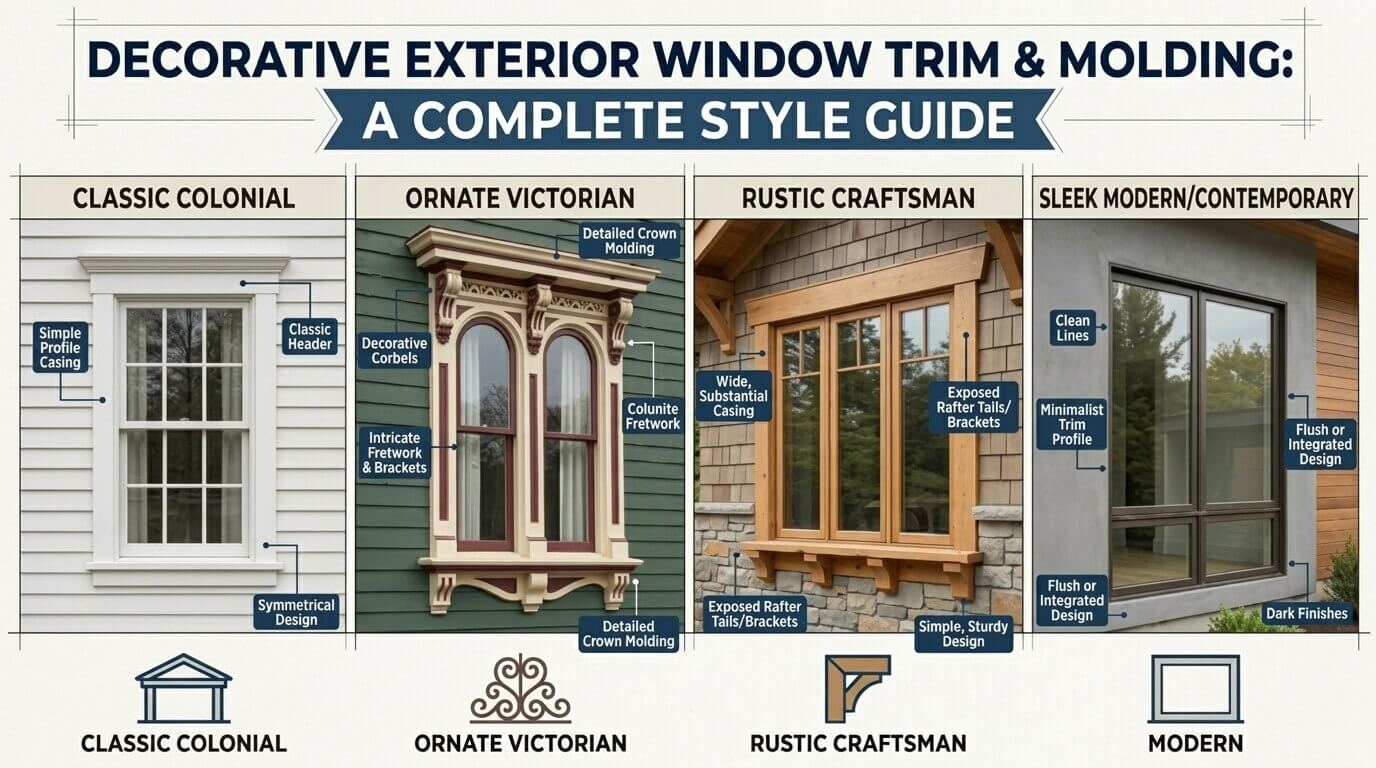

One of the fastest ways to upgrade your home’s exterior appearance is with decorative trim. Adding or replacing decorative exterior window trim changes the entire personality of a facade — from plain and forgettable to polished and distinctive. This guide covers everything you need to choose, install, and maintain exterior trim effectively.
Why Exterior Window Trim Matters
Window trim serves two functions: it looks beautiful and it protects your home. Properly installed decorative trim for exterior windows seals the gap between the window frame and the wall, preventing water intrusion and air leaks. At the same time, it creates visual framing that makes windows look intentional and architectural.
Without trim, even the most expensive windows can look bland and unfinished from the street.
Popular Styles of Decorative Exterior Window Trim
Choosing the right decorative window molding exterior style depends on your home’s architectural character.
1. Flat Band Trim
Simple, clean horizontal and vertical boards frame the window without ornamentation. This is the most popular style for modern, contemporary, and Craftsman homes. Easy to install and maintain.
2. Brick Mold Trim
A traditional decorative exterior house trim profile with a stepped edge originally designed to transition from a window frame to brick siding. Works with most home styles.
3. Colonial Pediment Style
Features a decorative header — often triangular or curved — above the window. Common in Colonial Revival, Georgian, and Federal-style homes. Creates a stately, formal look.
4. Craftsman Window Trim
Thick, flat boards with prominent corner blocks at the upper corners. This style is bold, simple, and deeply rooted in the American Arts and Crafts movement.
5. Victorian Scroll Trim
Ornate and decorative with carved or milled wood details, often painted white against a darker body color. Appropriate for Queen Anne, Italianate, and Victorian-era homes.
Best Materials for Decorative Window Trim Exterior
Material choice impacts both appearance and long-term performance of your decorative window trim exterior.
- PVC / Cellular PVC — Most popular choice today. Does not rot, warp, or absorb moisture. Paintable. Can mimic wood profiles exactly. Low maintenance.
- Composite Wood — Mixture of wood fiber and resin. Excellent durability with a more natural look and feel than PVC.
- Wood (Pine or Cedar) — Classic choice. Must be primed and painted well to resist moisture. Requires more maintenance but offers unsurpassed warmth and natural beauty.
- Fiber Cement — Extremely durable, resists insects and rot. Heavier and requires more care during installation. Good in humid climates.
- Aluminum — Lightweight and corrosion resistant. Used primarily in modern and industrial-style homes.
Exterior Decorative Door Trim: Framing Your Entryway
Your front door deserves as much attention as your windows. Decorative exterior door trim and exterior door decorative moulding elevate the look of your entry and signal craftsmanship and care to anyone approaching your home.
Popular door trim options:
- Pilasters and Entablature — Columns flanking the door with a horizontal header. Classical and formal.
- Raised Panel Door Surround — Adds dimensionality and shadow lines around the entry.
- Decorative Pediment — Triangular or broken pediment at the top of the door creates a dramatic focal point.
- Flat Casing with Brick Mold — Clean, classic, and works with nearly any architectural style.
When selecting exterior door decorative moulding, choose materials that match or complement your window trim for a cohesive look.
Decorative Exterior Shutter Styles to Complement Trim
Shutters and trim work together to frame windows beautifully. Common decorative exterior shutter styles include:
- Raised Panel Shutters — Traditional and formal, excellent for Colonial and Georgian homes
- Board and Batten Shutters — Rustic and Craftsman-appropriate, with vertical boards and horizontal battens
- Louvered Shutters — Classic and versatile, with angled slats for a timeless look
- Cut-Out Shutters — Decorative shapes (hearts, pine trees, anchors) cut into solid panels for a cottage or coastal feel
Shutters should be sized to cover the window opening when closed, even if they are purely decorative — otherwise they look out of proportion.
Installation Tips for Exterior Window Trim
- Prime before installing — Always prime all six sides of wood or composite trim before cutting and nailing
- Use corrosion-resistant fasteners — Stainless steel or hot-dipped galvanized nails and screws prevent rust streaks
- Caulk every gap — Use a paintable, exterior-grade silicone caulk at all joints and where trim meets the wall
- Paint promptly — Bare trim exposed to UV and moisture deteriorates fast; apply two coats of quality exterior paint within a week of installation
- Check level constantly — Even small alignment errors look obvious on a finished facade
Cost Guide: Decorative Exterior Window Trim
Typical costs for installing exterior decorative trim vary by material and complexity:
- PVC trim, per window: $100–$300 (materials and labor)
- Wood trim, per window: $150–$400
- Fiber cement trim, per window: $200–$500
- Decorative pediment header: $400–$800
Whole-home trim replacement averages $3,000–$8,000 for a standard single-family home.
Key Takeaways
- Decorative exterior window trim improves curb appeal and seals gaps against moisture and air
- PVC and cellular PVC are the most popular and low-maintenance trim materials
- Match shutter styles to your trim and architectural character for a cohesive result
- Always prime, caulk, and paint trim properly for maximum longevity
FAQs
What is the best material for exterior window trim?
PVC (cellular PVC) is the most popular choice for modern homes due to its moisture resistance, low maintenance, and ability to mimic wood profiles exactly.
How wide should decorative exterior window trim be?
Most decorative exterior house trim ranges from 3.5 to 5.5 inches wide. Larger windows and homes benefit from wider trim for proper visual proportion.
Can I install exterior window trim myself?
Yes, with basic carpentry skills. The most important steps are accurate measurement, proper priming, corrosion-resistant fasteners, and thorough caulking to prevent water intrusion.