
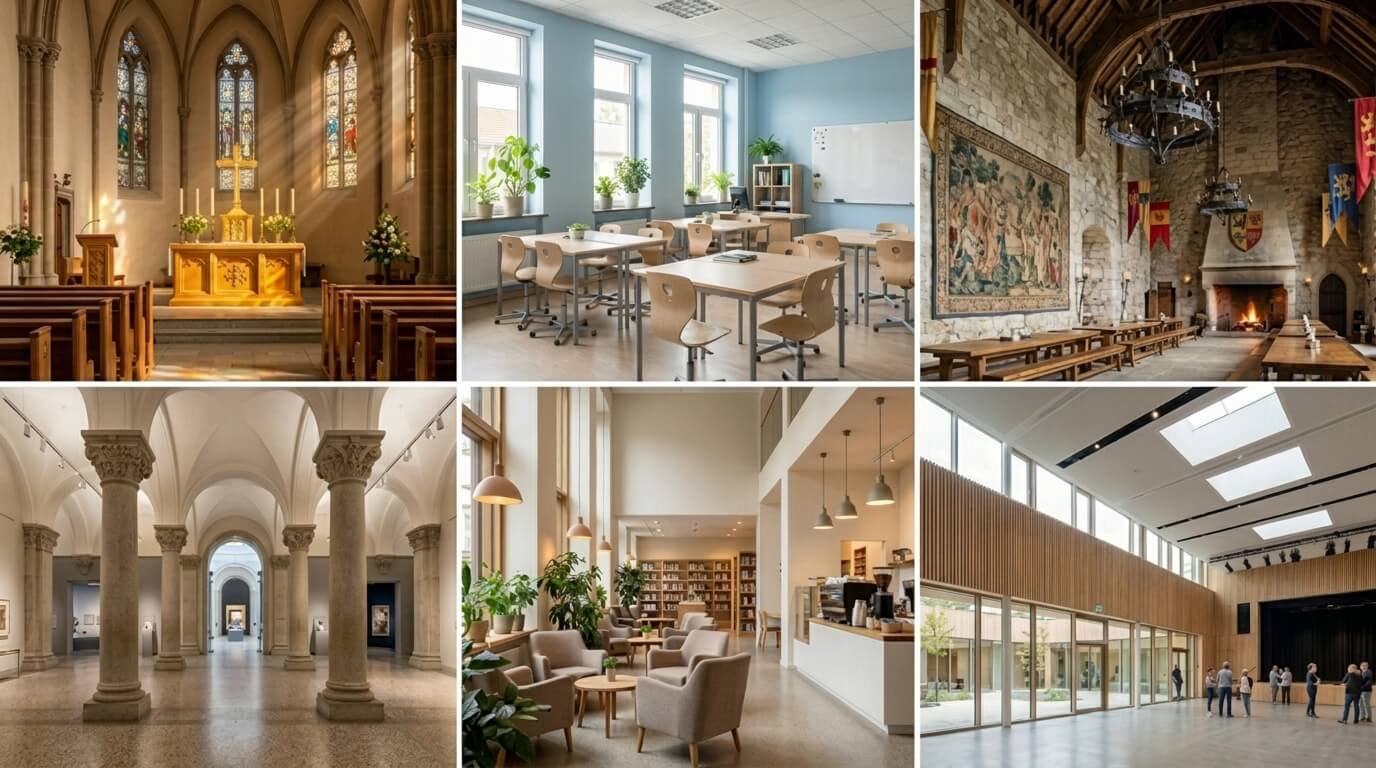

Interior decorating is not just for homes. Public and institutional spaces — from historic churches to busy classrooms to grand castle halls — all benefit enormously from thoughtful interior design. These spaces serve communities, inspire visitors, and communicate values through their aesthetic choices. Whether you are a facilities manager, an event planner, or simply curious about how large institutional spaces are decorated, this guide covers the key principles and ideas behind decorating churches, classrooms, castles, and other public spaces.
Church Interior Decorating
Decorating a church requires a unique balance between reverence and welcoming warmth. The interior should communicate the congregation’s values and traditions while also feeling accessible and inviting to visitors and newcomers.
Key Principles for Church Interior Decor
- Lighting is paramount — both natural and artificial should create a sense of the sacred
- Focal points (altar, cross, pulpit) should be visually dominant and uncluttered
- Acoustics matter — soft furnishings (carpet, cushioned pews) absorb echo
- Color should reflect the denomination’s liturgical traditions
- Seasonal decor (Advent, Easter, etc.) should be easily swappable
Modern church interior decorating often updates historic spaces with contemporary touches — warmer LED lighting replacing harsh fluorescents, fresh paint in welcoming neutrals, and comfortable seating alongside traditional pews.
Classroom Interior Decoration
Research consistently shows that the physical environment affects student learning outcomes. A well-designed classroom can improve focus, reduce anxiety, and promote collaboration.
Effective Classroom Decorating Strategies
- Use color thoughtfully: blues and greens promote focus; warm yellows and oranges inspire creativity
- Keep visual clutter manageable — too much stimulation can be distracting, especially for younger children
- Create defined zones: a reading corner, a collaborative work area, and a teacher’s presentation area
- Display student work at eye level to promote pride and ownership
- Use flexible, mobile furniture where budget allows
- Plants and natural light significantly improve learning environments
Classroom interior decoration has evolved significantly in recent years. Modern educational spaces often feel less institutional and more like collaborative studios, with flexible furniture, maker spaces, and technology integrated seamlessly into the design.
Castle Interior Decorating
Whether you are decorating an actual historic castle (lucky you) or creating a castle-inspired interior in a large home, the principles are similar. Castle interior decorating is about communicating grandeur, history, and a sense of permanence.
Castle Decor Essentials
- Stone walls (real or faux) as architectural backdrop
- Dramatic tapestries or large-scale artwork
- Heavy, dark wood furniture — long dining tables, carved armchairs
- Wrought iron lighting fixtures — chandeliers and sconces
- Rich, jewel-toned textiles — velvet, brocade, and damask
- Column interior decor — ornate pillars define spaces and communicate authority
The Role of Columns in Public Space Interior Decoration
Columns — architectural pillars that support or appear to support a structure — are powerful design elements in public and institutional spaces. Whether Doric, Ionic, or Corinthian in style, columns interior decoration communicates permanence, tradition, and grandeur.
In modern commercial interior decor, columns are often wrapped in stone veneer, paneling, or decorative tile to transform structural necessities into design features. In a café, a well-decorated column can anchor a seating zone. In a church, columns create visual rhythm and guide the eye toward the altar.
Coffee Shop Interior Decoration in Mixed-Use Public Spaces
Libraries, museums, hospitals, and universities increasingly incorporate coffee shop interior decoration into their lobbies and common areas. This humanizes large institutional spaces and creates welcoming gathering points.
The commercial interior decor for these embedded cafés typically mirrors the parent institution’s aesthetic — a museum café might feature display cases of artifacts, while a hospital coffee shop prioritizes calm, healing colors and comfortable seating.
Café Interior Decoration in Public Spaces
A well-designed café inside a larger institutional space creates a community hub. The café interior decoration should feel distinct from the surrounding space — a visual and experiential break — while still being harmonious with the overall aesthetic.
For more public and commercial decorating ideas, visit Home Altar Guide
Explore the Interior Design section for professional-level design guidance.
Check out the Home Improvement category for renovation tips applicable to any space.
Public and institutional interior decorating carries a responsibility that residential design does not — these spaces serve and affect entire communities. Whether you are refreshing a church sanctuary, designing a classroom, or reimagining a castle hall, the principles of good design apply: understand the purpose of the space, honor its history and context, and create an environment that supports the people who use it.