
Panels, screens, and brass accents sit at the intersection of style and function. They can hide an unsightly utility area, add privacy to a patio, or simply give a plain wall some texture. In this guide, we’ll look at the most popular options in decorative brass, panels, and screens and how to use each one around the home.
Decorative Brass Wall Plates
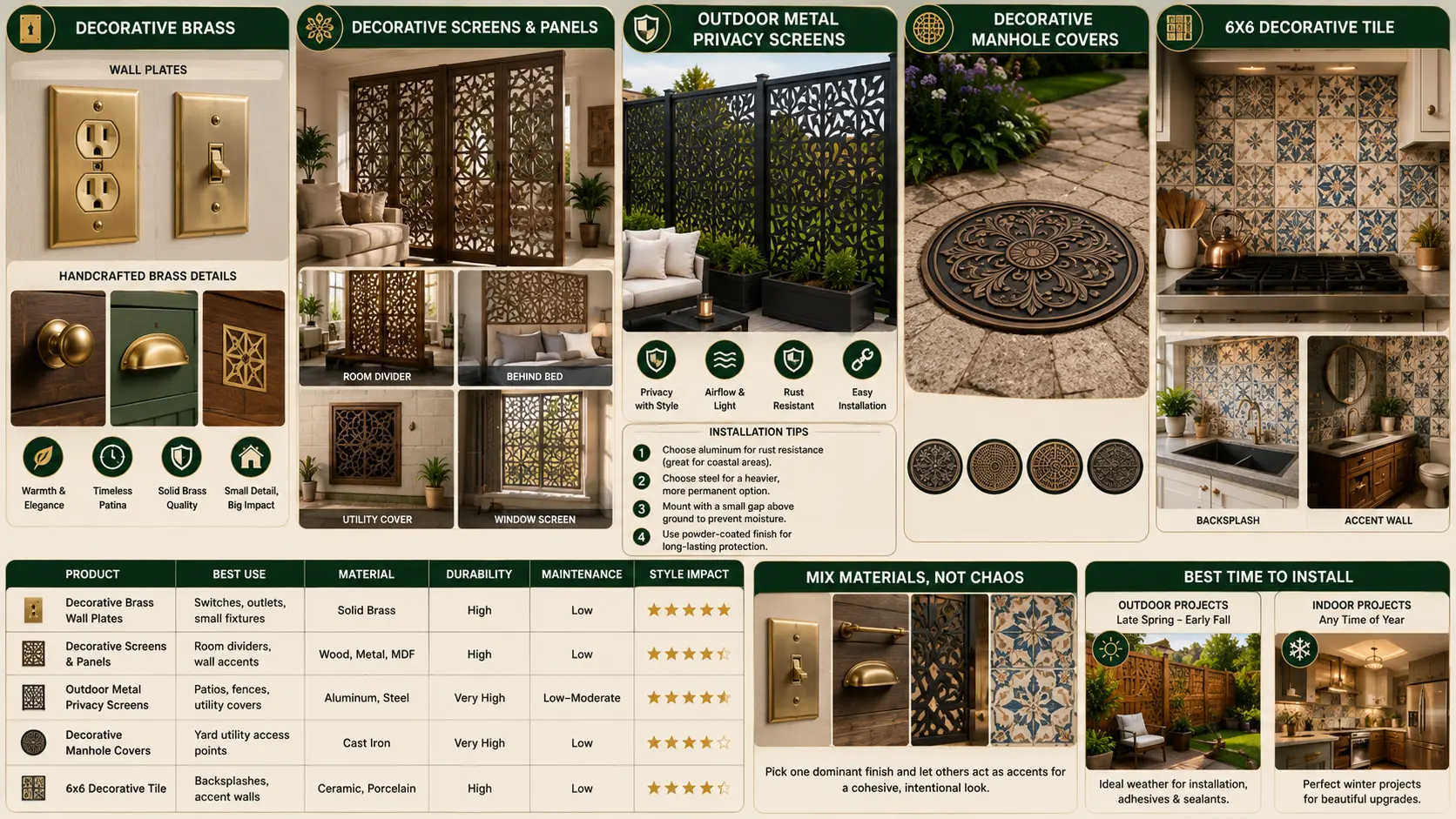
Decorative brass wall plates are a simple upgrade for outlets, switches, and thermostats. Swapping a plain white plastic cover for a brushed or antique brass plate is a low-cost way to add a warm, finished detail to any room, especially in kitchens and entryways where fixtures are more visible.
- Brushed brass hides fingerprints better than polished finishes
- Antique brass pairs well with vintage or farmhouse-style rooms
- Most plates are a direct swap with standard screw placement
- A small, affordable way to refresh an entire room’s hardware
Handcrafted Brass Details for the Home
Beyond wall plates, brass shows up in drawer pulls, cabinet inlays, and small decorative accents throughout the home. Well-made brass pieces develop a natural patina over time, which many homeowners consider part of the appeal rather than something to avoid. If you’re sourcing brass accents for a furniture refresh, look for solid brass rather than a brass-plated finish, since solid pieces age more gracefully and resist chipping.
Decorative Screens and Panels
Decorative screens and panels serve two purposes at once: visual interest and practical concealment. A carved wood or metal panel can divide a room, soften a doorway, or hide a utility box, all while adding pattern and texture that a blank wall can’t offer.
Where Decorative Panels Work Best
- As a room divider in open-concept living spaces
- Mounted behind a bed as an alternative headboard
- Covering HVAC returns or utility panels without hiding airflow
- Layered in front of a window for filtered natural light
Outdoor Decorative Metal Privacy Screens
Outdoor decorative metal privacy screens have become one of the most requested patio upgrades in recent years. Laser-cut steel or aluminum panels block sightlines from neighbors while still allowing airflow and light through the cutout pattern, which is a major advantage over solid fencing.
- Choose aluminum for lighter weight and better rust resistance near coastal areas.
- Choose steel for a heavier, more permanent installation.
- Mount panels with a small gap above ground level to prevent moisture buildup.
- Apply a powder-coated finish for the longest-lasting color and rust protection.
These panels also work well combined with raised planters or trellises for a layered look — a great addition if you’re already planning updates to your garden this season.
Decorative Manhole Covers
Decorative manhole covers are a niche but growing category, used to disguise utility access points in a yard or driveway with a more attractive cast pattern instead of plain gray concrete or steel. They’re most common in landscaped front yards where a utility cover would otherwise stand out.
6×6 Decorative Tile
6×6 decorative tile is a standard size used for accent borders, backsplashes, and small feature walls. Because the size is so common, it’s easy to mix and match patterns from different collections without worrying about spacing or grout line consistency.
| Product | Best Use | Maintenance Level |
| Decorative brass wall plates | Switches, outlets, small fixtures | Low |
| Decorative screens and panels | Room dividers, wall accents | Low |
| Outdoor metal privacy screens | Patios, fences, utility covers | Low to moderate |
| Decorative manhole covers | Yard utility access points | Low |
| 6×6 decorative tile | Backsplashes, accent walls | Low |
Mixing Materials Without Overdoing It
The easiest way to keep a mix of brass, metal panels, and tile from feeling cluttered is to pick one dominant finish and let the others act as accents. For example, a brushed brass wall plate pairs nicely with a black metal privacy screen outside, as long as the undertones — warm versus cool — stay consistent across the interior design of the home.
Seasonal Timing for These Projects
Late spring and early fall tend to be the best windows for outdoor screen and panel installation, since the ground is workable and temperatures are mild enough for adhesives and sealants to cure properly. Indoor projects like brass hardware swaps and tile accents can happen any time of year, which makes them a good winter project when outdoor work isn’t practical.
Planning around these seasonal windows, rather than starting a big outdoor screen project in the middle of summer heat or winter freeze, generally leads to a smoother installation and a longer-lasting finish.
Frequently Asked Questions
Will brass wall plates tarnish over time?
Unlacquered brass will develop a natural patina over months or years, while lacquered brass resists tarnishing but may eventually need refinishing.
Are outdoor metal privacy screens hard to install?
Most panels come with a bracket or post-mount system designed for a weekend DIY project, though very large or heavy steel panels may require a second installer.
Can decorative screens be used indoors and outdoors?
It depends on the material. Powder-coated metal and treated wood panels can handle outdoor exposure, while raw wood or MDF panels are best kept indoors.
What’s the standard grout spacing for 6×6 decorative tile?
Most installers use a 1/8 inch grout line for 6×6 tile, though pattern tiles with irregular edges may call for a slightly wider spacing.
Planning a Privacy Screen Layout Before You Buy
Before ordering an outdoor screen, measure the exact sightline you’re trying to block rather than guessing at a panel size. Stand in the spot where privacy matters most — a hot tub, a dining area, or a back porch — and note the height and width needed to block the view from a neighbor’s upstairs window or a busy sidewalk. Buying panels that are too short is the most common regret homeowners report after installing a metal privacy screen.
It also helps to plan for panel spacing early. Outdoor decorative metal privacy screens are usually sold in fixed widths, so laying out your total fence or patio length in advance prevents an awkward gap or overlap at the end of a run.
Caring for Brass, Metal Panels, and Tile Long-Term
- Dust brass wall plates with a dry microfiber cloth; avoid abrasive cleaners that strip lacquer coatings.
- Rinse outdoor metal screens after coastal storms to remove salt residue before it causes pitting.
- Reseal grout lines around 6×6 decorative tile every one to two years in high-moisture rooms like bathrooms.
- Check manhole cover edges annually for shifting soil or settling that could create a trip hazard.
None of this maintenance is difficult, but skipping it is usually what shortens the life of otherwise well-made hardware. A five-minute rinse after a storm, for example, can add years to a steel privacy screen’s finish.
Budget Planning for a Panels-and-Brass Refresh
Not every project needs to happen at once. A practical order of operations for most homeowners is: start with brass wall plates and small hardware swaps, since they’re the cheapest and fastest to update. Move next to an interior accent panel or a section of 6×6 tile for a focal wall. Save the largest expense — a full outdoor privacy screen installation — for when the rest of the budget allows, since it typically involves the most material and labor.
This staged approach also gives you time to see how each finish looks in natural light across different seasons before committing to a larger, more permanent piece like a cast iron panel or a full-length metal screen.
Working With a Contractor vs. Doing It Yourself
Small items like brass wall plates and single accent panels are firmly DIY territory for most homeowners. Larger installations — a full-length outdoor privacy screen anchored into concrete footings, or a tiled feature wall spanning floor to ceiling — are usually worth hiring a contractor for, both to ensure proper anchoring and to avoid voiding any material warranty that requires professional installation.
A good rule of thumb: if the project involves digging, pouring concrete, or working above shoulder height on a ladder, it’s worth at least a consultation with a local contractor, even if you end up doing the simpler prep work yourself.
Quick Key Points
- Decorative brass wall plates are one of the cheapest, fastest room refreshes available.
- Decorative screens and panels add privacy and texture indoors and outdoors.
- Outdoor metal privacy screens balance airflow with visual privacy better than solid fencing.
- Sticking to one dominant metal finish keeps a mixed-material room looking intentional.
As with any hardware project, ordering a single sample piece before committing to a full order is the safest way to confirm color, scale, and finish match what you pictured, especially when shopping online where lighting in product photos can shift the true tone of a brass or metal finish.
A Quick Pre-Purchase Checklist
- Confirm brass hardware is solid rather than plated if you want it to age gracefully
- Check the gap clearance under privacy screens to avoid trapped moisture
- Order 5–10% extra tile to account for cuts and future repairs
- Verify manhole cover dimensions against the existing utility opening before ordering
Final Key Points Summary
Panels, screens, and brass hardware are some of the most versatile tools in a homeowner’s design toolkit. They solve practical problems — privacy, concealment, worn-out fixtures — while adding real style at the same time. Start small with a set of wall plates or a single accent panel, then build toward larger installations like an outdoor privacy screen once you know which finishes and patterns fit your home best.