
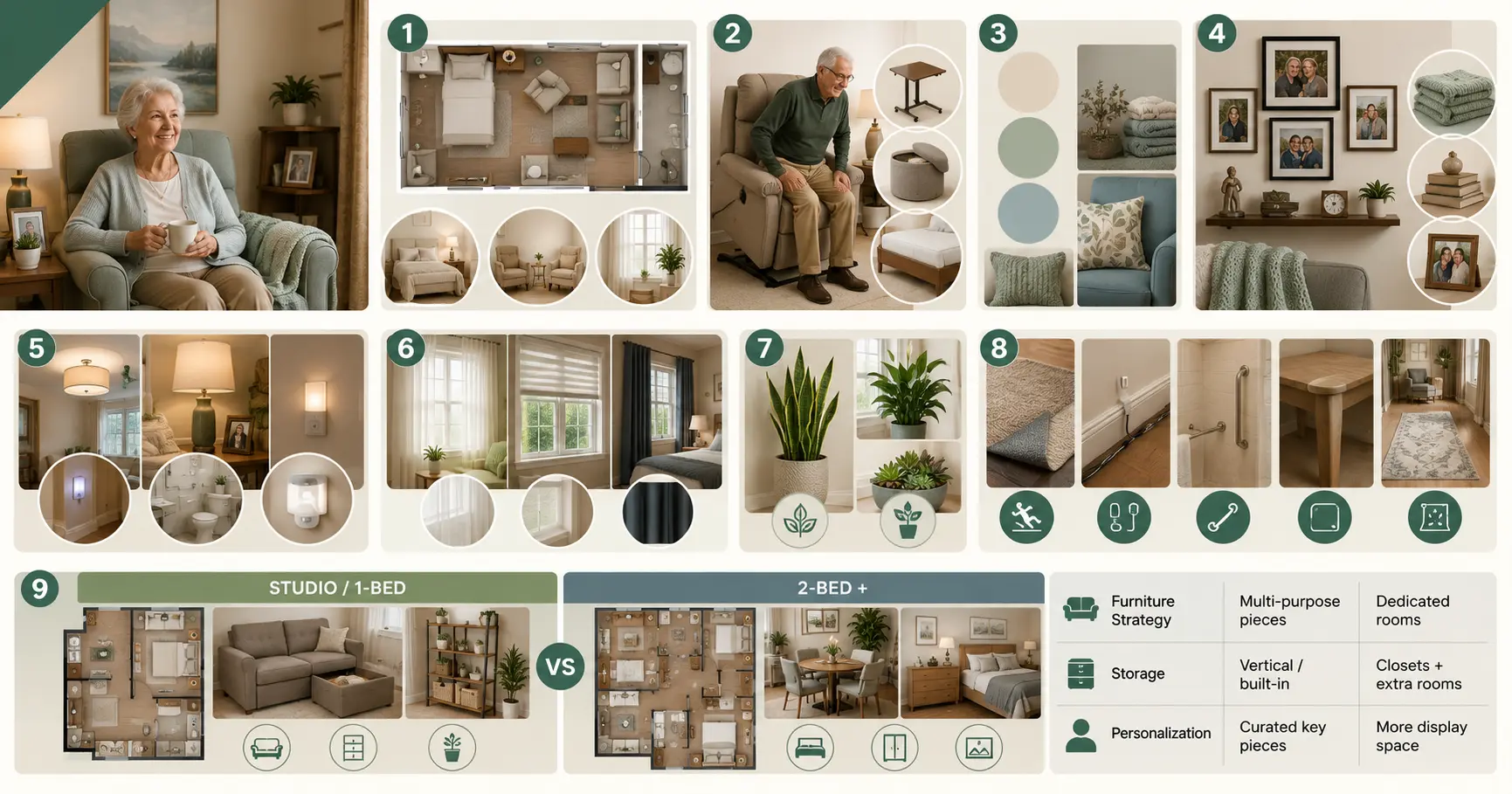

Moving into a senior living apartment doesn’t mean leaving your personality behind. With the right approach, you can turn a compact space into a warm, functional, and beautiful home. Whether you’re helping a parent settle in or decorating for yourself, these ideas will make the process easy and enjoyable.
Why the Right Decor Matters for Seniors
A well-decorated space does more than look nice. It supports safety, comfort, and mental well-being. Studies show that familiar surroundings help reduce stress and improve mood — especially important for older adults adjusting to a new environment.
Good interior design for seniors balances beauty with function. Think easy-to-navigate furniture layouts, non-slip rugs, proper lighting, and personal touches that feel familiar.
Start With a Smart Layout
Before you bring in any furniture, think about movement. Wide pathways (at least 36 inches) allow walkers or wheelchairs to move easily. Keep frequently used items within arm’s reach.
Try these layout tips:
- Place the bed near the bathroom for nighttime safety
- Keep living room seating close together for easy conversation
- Avoid blocking windows — natural light improves mood and reduces eye strain
- Use a small side table next to every seating area for convenience
Choose the Right Furniture
When decorating a senior living apartment, choose furniture that is sturdy, supportive, and easy to get in and out of. Chairs and sofas with firm cushions and armrests are ideal.
Key furniture choices:
- Lift chairs for those with joint issues
- Adjustable-height tables for flexibility
- Ottomans with storage inside to reduce clutter
- A bed with a solid frame and proper mattress height — roughly 20 to 23 inches from the floor
Use Familiar Colors and Patterns
Color impacts how a space feels. Soft, warm tones like beige, cream, sage green, and dusty blue create a calming atmosphere. Avoid overly busy patterns that can feel overwhelming or hard to process visually.
For decor accents, bring in beloved colors from your previous home. A familiar color palette helps seniors feel grounded and comfortable in their new space.
Personalize With Meaningful Items
This is where decorating gets truly special. Surround yourself with items that carry memories — family photos, travel souvenirs, favorite books, or a beloved piece of art.
Ideas for personalizing your space:
- Create a gallery wall with family photos
- Display small collectibles on a floating shelf
- Add a blanket from home to the couch
- Keep a framed photo on the bedside table
Lighting: The Key to Safety and Ambiance
Good lighting is essential in any senior living space. Layer your light sources: overhead lighting for general use, task lighting for reading, and soft lamps for evening ambiance.
Don’t forget nightlights in hallways and bathrooms. Motion-sensor lights are a great home improvement upgrade that reduces fall risk.
Window Treatments That Work
Natural light is a mood booster, so keep windows as open as possible. Choose light, sheer curtains that filter sunlight without blocking it. Blackout curtains in the bedroom help with sleep quality.
If privacy is a concern, adjustable blinds give you full control. For exterior design inspiration that ties in with your windows, consider matching interior and exterior tones.
Add Greenery for a Fresh Feel
Plants bring life to any room. Even in a small apartment, a few potted plants can make a big difference. Succulents, peace lilies, and snake plants are low-maintenance options that thrive indoors.
If caring for live plants feels like too much, high-quality artificial plants look great and require zero maintenance. Check out garden ideas for inspiration on bringing nature indoors.
Safety-First Decorating Tips
Style and safety can coexist. Here’s how to keep the space beautiful AND safe:
- Use non-slip rugs or secure all area rugs with anti-slip pads
- Remove cords and cables from walkways
- Install grab bars in bathrooms (decorative ones are available)
- Choose rounded-edge furniture over sharp corners
- Keep pathways clear of unnecessary furniture
Quick Comparison: Small vs. Large Senior Apartments
| Feature | Studio / 1-Bed | 2-Bed + |
| Furniture Strategy | Multi-purpose pieces | Dedicated rooms |
| Storage | Vertical / built-in | Closets + extra rooms |
| Personalization | Curated key pieces | More display space |
FAQs About Decorating a Senior Living Apartment
| How do I make a small senior apartment feel bigger? | Use light colors, mirrors, and multi-functional furniture. Keep clutter to a minimum and maximize natural light. |
| What furniture is best for seniors? | Look for chairs and sofas with firm cushions and armrests. Avoid low-slung sofas that are hard to get up from. |
| Can I hang pictures in a senior apartment? | Most senior living communities allow wall hangings. Use removable adhesive strips to avoid damaging walls. |
| How do I make a senior apartment feel cozy? | Layer textures with throw blankets, soft rugs, and cushions. Add warm lighting and personal mementos. |
| What colors work best in senior living spaces? | Warm neutrals like beige, cream, and soft blue work well. Avoid very dark tones that can feel closed in. |
- Prioritize safety first — clear pathways, non-slip rugs, good lighting
- Choose sturdy, supportive furniture with armrests
- Use familiar colors and personal mementos to create comfort
- Layer your lighting for both safety and ambiance
- Small plants and natural light improve mood and well-being
Decorating a senior living apartment is all about making a new space feel like home. With thoughtful choices in decor, furniture, and lighting, you can create a place that is beautiful, safe, and deeply personal. Start small, keep what matters, and let your story fill every corner of your new space.