
There’s a significant difference between a home improvement project that’s merely completed and one that’s done with true precision. Precision home improvement isn’t just a contractor’s buzzword — it’s a philosophy that prioritizes accuracy, craftsmanship, and attention to detail at every stage of renovation.
Whether you’re installing new flooring, remodeling a bathroom, or replacing windows, precision is what separates work that lasts decades from work that needs to be redone in five years.
What Is Precision Home Improvement?
At its core, precision home improvement means measuring accurately, planning thoroughly, and executing with care. It means using the right tools for the job, selecting quality materials, and not cutting corners because it’s faster or cheaper.
This approach applies to both DIY projects and professional contracting. A homeowner installing tile can practice precision just as a professional remodeler can — it’s about mindset and methodology, not just skill level.
Explore the full range of Home Improvement resources to find guides that emphasize this precision-first approach.
The True Cost of Imprecision
Cutting corners in home improvement is almost always more expensive in the long run. Consider:
- Tile installed without proper layout planning results in awkward cuts at room edges
- Framing that’s slightly off-square makes everything else harder to align
- Painting without proper prep leads to peeling within a year or two
- Plumbing connections that aren’t properly sealed cause water damage over time
Each of these “small” imprecisions compounds. A home built or renovated with consistent precision has fewer problems, requires less maintenance, and retains its value better.
Key Areas Where Precision Matters Most
Flooring Installation
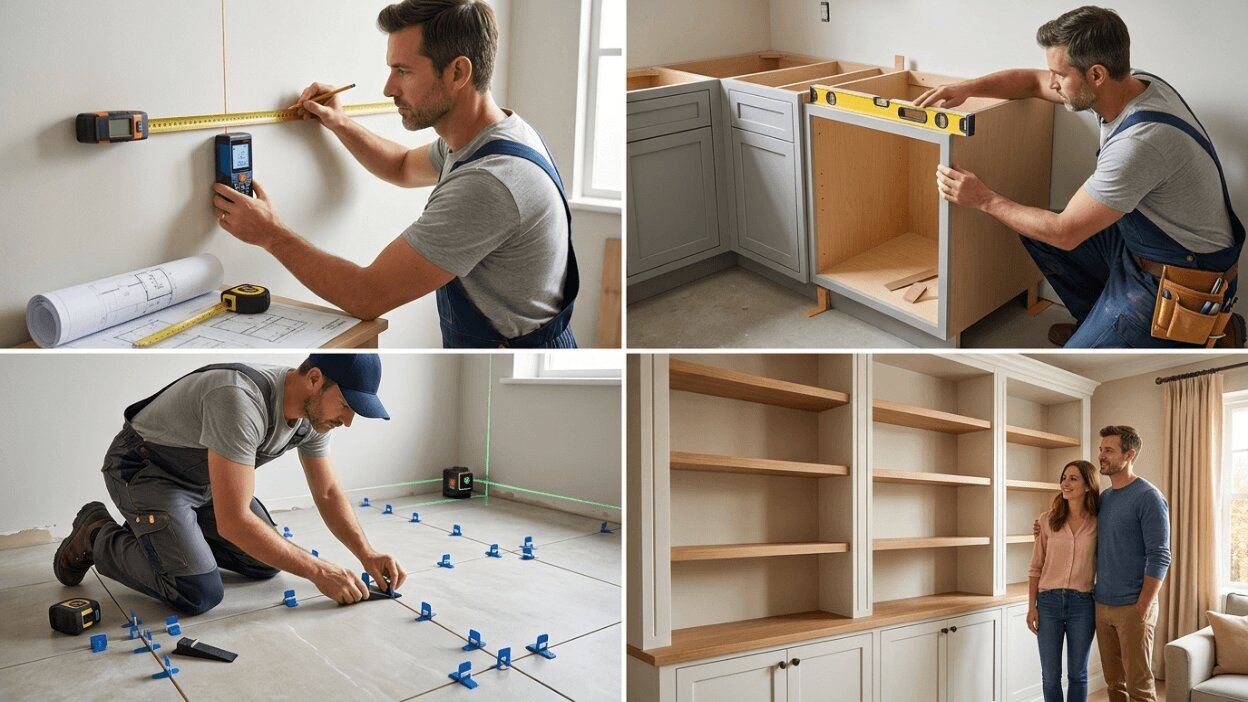
In flooring, precision home improvement starts with proper subfloor preparation, accurate measurements, and careful layout planning. Hardwood, tile, and luxury vinyl all require precise installation for long-term performance and visual appeal.
Cabinetry and Built-Ins
Cabinets are unforgiving. Even slight misalignment shows immediately and affects both appearance and function. Precision installation means using levels, shims, and fasteners correctly — every cabinet perfectly plumb and level.
Window and Door Installation
Imprecise window or door installation leads to gaps, drafts, water infiltration, and operational problems. Proper shimming, flashing, and sealing are essential components of precision home improvement in this area.
Electrical and Plumbing
Accuracy in these trades isn’t just aesthetic — it’s a safety issue. Precision in electrical work means correctly sizing circuits, proper wire routing, and secure connections. In plumbing, it means leak-free joints and properly sloped drain lines.
For kitchen and bathroom renovations where plumbing and electrical precision matter most, Kitchen Decoration guides offer helpful context.
How to Find Precision Home Improvement Contractors
Not all contractors approach their work with the same level of care. Here’s how to identify those who practice precision home improvement:
- Ask to see completed projects — precision work is visible in the details
- Look for contractors who ask detailed questions during the estimate
- Request references and ask specifically about attention to detail
- Check whether they use quality tools and materials, not just budget options
- Ask about their process for checking plumb, level, and square at each stage
A contractor who talks about process and quality — not just price and speed — is likely committed to precision.
DIY Precision: Tips for Homeowners
Measure Everything Twice
The old carpenter’s rule — measure twice, cut once — is the foundation of precision home improvement. An extra 30 seconds of verification prevents wasted materials and frustrating rework.
Invest in Quality Tools
Precision work requires precision tools. A quality level, accurate tape measure, and sharp cutting tools make every task easier and more accurate. Cheap tools make precision harder, not easier.
Take Your Time
Rushing is the enemy of precision. Budget adequate time for each stage, and resist the temptation to skip preparation steps.
When your space is complete, bring that same precision to interior decoration choices that complement your refined renovation.
FAQs About Precision Home Improvement
Does precision home improvement cost more?
It may cost slightly more upfront — quality tools, better materials, and more time. But precision home improvement consistently costs less over the life of the project because you’re not redoing work or fixing problems caused by imprecision.
Can beginners achieve precision in DIY projects?
Absolutely. Precision is a learnable skill. Start with smaller projects, use quality tools, follow instructions carefully, and take your time. Precision improves with practice.
What’s the most common precision mistake homeowners make?
Skipping the planning and layout stage. Most visible imprecision — awkward tile cuts, misaligned cabinets, off-center fixtures — could have been avoided with five minutes of layout planning before starting.
Precision home improvement is the foundation of renovation work that looks great, functions properly, and lasts. Whether you’re doing it yourself or hiring professionals, demanding accuracy at every stage is the single most impactful standard you can set for your project.
Take pride in the details. The difference between good and excellent in home improvement often comes down to millimeters and minutes of extra care.