
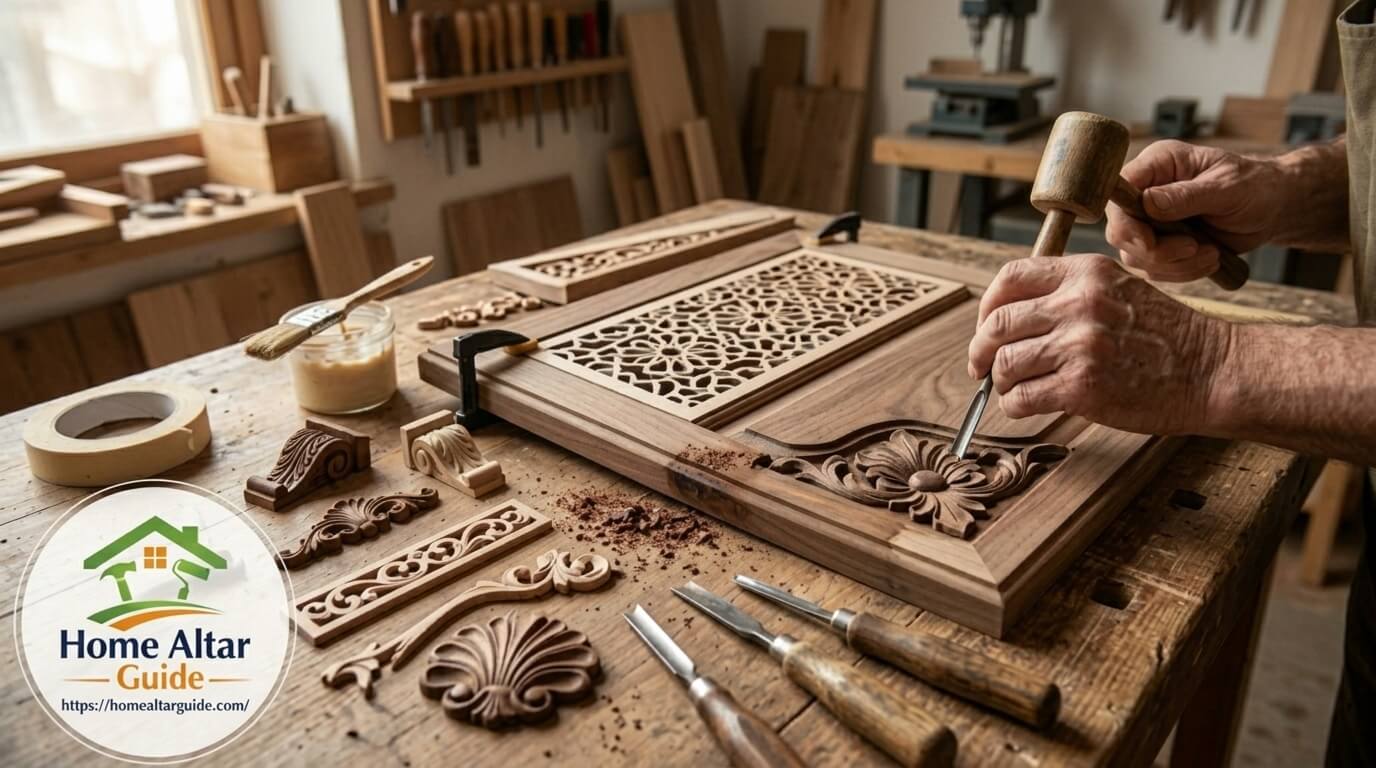

Walk through any antique store and you will notice one thing — the most beautiful furniture pieces are covered in detail. Carved scrollwork, layered strips, textured panels, and intricate cutouts. These are not accidents. They are intentional design choices that took plain wood and turned it into art.
Today, you can recreate this look in your own home without being a master woodworker. Decorative wood accents for furniture, decorative wood carvings for furniture, and decorative wood cutouts for furniture are widely available and easy to work with. This guide will show you exactly how.
What Are Decorative Wood Accents for Furniture?
Wood accents are any decorative element added to furniture to enhance its visual appeal. This is a broad category that includes carvings, cutouts, strips, panels, corner pieces, and surface overlays. They are typically made from basswood, pine, MDF (medium-density fiberboard), or polyurethane resin.
Why do homeowners love wood accents? Because they allow for total creative control. You pick the style, scale, and placement. The result is furniture that feels custom-made — because it is.
Decorative Wood Carvings for Furniture: A Timeless Craft
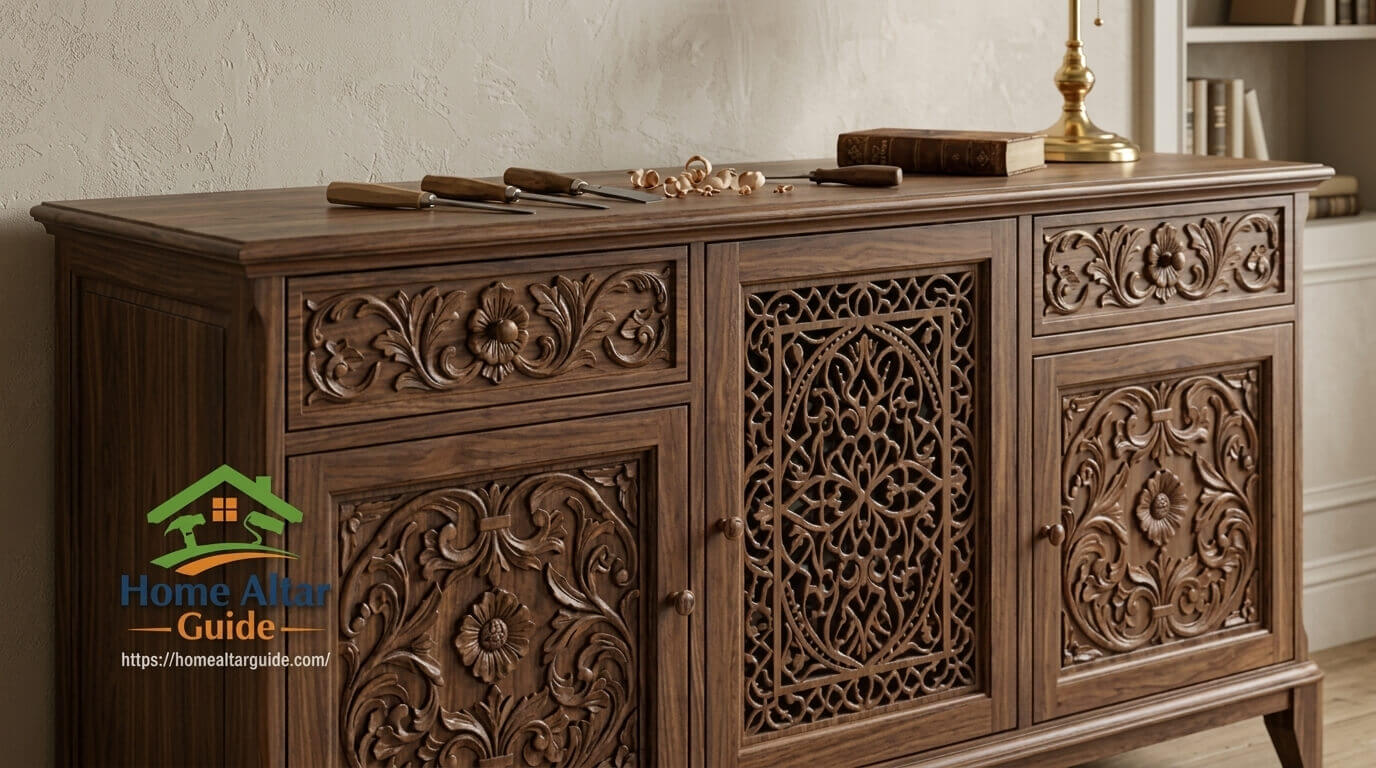
Carved wood details have been used in furniture for thousands of years. Egyptian thrones, Chinese imperial cabinets, and European baroque pieces all relied on hand-carved wood to signal craftsmanship and status. Today, CNC-machine-produced carvings bring that same look to everyday American households at a fraction of the cost.
Decorative wood carvings for furniture typically come in two forms:
- Relief carvings — flat on the back, raised design on the front; glued onto surfaces
- Through carvings — carved all the way through the wood; used for decorative inserts
| Carving Style | Best Furniture Application |
| Floral Relief | Headboard center, cabinet doors |
| Scroll and Vine | Chair backs, mirror frames |
| Geometric Pattern | Modern drawer fronts, shelves |
| Medallion | Cabinet doors, tabletops |
| Corner Rosette | Bed posts, wardrobe corners |
| Animal or Nature | Children’s furniture, accent pieces |
“Wood carvings are where furniture stops being functional and starts being meaningful.” — Interior Designer
How to Use Decorative Wood Pieces for Furniture
Decorative wood pieces for furniture cover a wide range — from small corner ornaments to large center medallions. The key to using them well is understanding scale and placement.
Rules of thumb for placement:
- Large medallions work best as a single central focal point
- Smaller carvings look best in symmetrical pairs
- Corner pieces should be used on all four corners for visual balance
- Multiple strip elements should maintain equal spacing
📝 Note: Odd numbers (1, 3, 5 pieces) often look more dynamic and natural than even numbers in decorative arrangements.
Decorative Wood Cutouts for Furniture
Cutouts are a unique subcategory of wood accents. Unlike solid carvings, cutouts are shapes cut all the way through a thin sheet of wood. They create a shadow-box effect and allow light to pass through, adding depth and interest.
Popular uses for decorative wood cutouts for furniture include:
- Cabinet door inserts (replacing glass with wood cutout panels)
- Shelf backing decorations
- Headboard centerpieces
- Side table apron details
- Wardrobe door center panels
Decorative Wood Strips for Furniture
Strips are thin, long pieces of shaped or plain wood used to add line work to furniture. They are often used in combination with other accents to create defined sections, borders, and geometric patterns on flat surfaces.
Common strip applications:
- Creating a faux-panel effect on flat cabinet doors
- Outlining drawer fronts to add depth
- Creating a border around a tabletop
- Adding texture to plain headboard surfaces
Decorative Wood Panels for Furniture
Panels are larger flat pieces — usually decorative in nature — applied to furniture surfaces to cover them entirely or in sections. They can be smooth, textured, or feature an embedded pattern.
One popular trend in American homes is the shiplap panel look applied to the back of bookshelves and entertainment centers. This technique uses wood panels to create a rustic backdrop that makes items on the shelves pop.
| Panel Type | Effect It Creates |
| Smooth flat panel | Clean, modern look |
| Shiplap panel | Rustic, farmhouse feel |
| Beadboard panel | Cottage, traditional charm |
| Geometric pattern | Contemporary, bold statement |
| Carved relief panel | Formal, luxurious appearance |
Pros and Cons of Decorative Wood Accents
| Pros | Cons |
| Affordable way to customize furniture | Requires precise measurement and cutting |
| Wide variety of styles available | Some materials are fragile |
| Works on new and old furniture | Heavy carvings need strong adhesive |
| Can mimic expensive custom work | Painting requires skill for seamless results |
| Lightweight and easy to ship | Quality varies widely by manufacturer |
Step-by-Step: Adding Wood Carvings to a Dresser
Step 1: Choose Your Design
Decide on the style — floral for traditional, geometric for modern, or abstract for eclectic. Keep the carving style consistent with the furniture’s overall design language.
Step 2: Measure and Mark
Find the center of the surface. Mark placement lightly with a pencil. Ensure the design is centered both horizontally and vertically.
Step 3: Apply Adhesive
Use wood glue or a strong construction adhesive. Apply to the back of the carving in a thin, even layer.
Step 4: Press Firmly
Hold the carving in place for 30-60 seconds. Apply painter’s tape to hold it while the glue sets overnight.
Step 5: Finish and Paint
Fill any gaps around the edges with wood filler. Sand smooth. Prime and paint to match or contrast with your furniture.
FAQs
What are the best wood accents for furniture?
Floral relief carvings, corner rosettes, scroll-pattern strips, and geometric cutouts are among the most popular and versatile wood accents for furniture. The best choice depends on your furniture style — traditional pieces suit floral carvings while modern pieces look great with clean geometric strips.
How do I attach decorative wood carvings to furniture?
Use wood glue for lightweight pieces and construction adhesive for heavier carvings. Always sand the surface first, apply adhesive evenly, press firmly, and allow full cure time before painting.
Explore more furniture ideas for your home on our dedicated furniture page.
Key Takeaways
- Wood carvings add timeless elegance to any furniture piece
- Cutouts create depth and shadow effects
- Strips add line work and structure
- Panels transform entire surfaces quickly
- Measure carefully before cutting or gluing anything
- Prime and paint for a seamless, professional finish