
Walls are the largest surface area in any room, and yet they are often the most overlooked element of interior design. Great interior design wall decor transforms flat, empty planes into focal points, mood-setters, and personal expressions. This guide dives deep into interior design wall decor ideas explores what interior designer home decor really looks like, and brings you interior designer christmas decor inspiration to elevate your holiday season.
Interior Design Wall Decor: Why Walls Matter
The walls in a room do far more than hold the ceiling up. They set the colour tone of the space, they carry art and mirrors, they can be textured, panelled, wallpapered, or painted to completely transform the character of a room.
Empty walls are not minimalism — they are unfinished rooms. Even the most minimal spaces include intentional choices about wall treatment. A single large painting. A textured plaster finish. A carefully considered paint colour. These are all forms of interior design wall decor and they are all design decisions that require thought.
Interior Design Wall Decor Ideas: Complete Guide
Here are the most effective and beautiful interior design wall decor ideas used by professional designers today.
1. Gallery Walls
A gallery wall is a curated collection of artwork, photographs, mirrors, and objects arranged on a single wall to create a collected, personalised display.
How to do it well:
- Mix sizes, mediums, and frame styles, but find a unifying element — a consistent frame colour, or a shared colour story in the artwork.
- Lay the arrangement out on the floor before hanging anything.
- Start from the centre and work outward.
- Include variety — not just paintings and photos, but also mirrors, ceramic wall plates, textiles, and three-dimensional objects.
- Leave approximately 5–10cm between pieces.
2. Statement Wallpaper
A single wall of bold, beautiful wallpaper is one of the most transformative design moves available. A botanical print in a bedroom, a geometric in a hallway, a maximalist floral in a dining room — the right paper on one wall changes everything.
Current wallpaper trends:
- Large-scale botanical and tropical prints.
- Abstract, painterly murals.
- Textured grasscloth and linen weave papers.
- Vintage-inspired block print patterns.
- Dark and moody papers in deep teal, forest green, and inky blue.
3. Wall Panelling
Panelling adds architectural depth and texture to walls. Current popular forms include:
- Shaker panelling: Clean, geometric, rectangular panels applied to the lower half of walls, typically painted.
- Full-height vertical panelling: Creates a sense of height in rooms with low ceilings.
- Curved panelling: Arched and curved panelling panels in the style of a Georgian hallway or a 1970s revival aesthetic.
- Fluted panels: Narrow vertical ridges that create tactile texture and visual rhythm.
4. Mirrors
Mirrors are one of the most powerful tools in interior design wall decor. They reflect light, create the illusion of space, and add glamour and depth.
- In hallways, a large mirror opposite the entrance immediately makes the space feel larger and more welcoming.
- In living rooms, a mirror above the fireplace reflects the room and the light from both the fire and windows.
- In bedrooms, a full-length mirror on a wall rather than behind a door is both practical and elegant.
5. Sculptural Wall Art
Three-dimensional wall art — ceramic wall plates, woven baskets, macramé hangings, sculptural metal forms, wooden reliefs — adds texture and shadow to walls in a way that flat art cannot.
This is particularly effective in rooms with otherwise minimal decor: a single large sculptural piece on a plain wall makes a stronger statement than a gallery of smaller prints.
6. Paint Colour as Wall Decor
The colour of a wall is itself a design decision. Dark walls — forest green, navy, charcoal, terracotta — make a room feel intimate, rich, and dramatic. Light walls — white, cream, pale sage — make spaces feel open, clean, and calm.
Colour-blocking — painting blocks of colour on walls rather than a uniform single tone — is a particularly striking technique used in contemporary interior design.
Interior Designer Home Decor: What the Professionals Do Differently
When a skilled interior designer decorates a home, certain things are always present — and certain things are always absent.
What designers do:
- They start with a clear brief and a concept that guides every subsequent decision.
- They specify rather than shop — they know exactly what they want before they begin sourcing.
- They think in terms of layering — objects at multiple heights, multiple depths, multiple textures.
- They edit ruthlessly — if something does not serve the space, it does not stay.
- They pay attention to details most people overlook: the profile of a skirting board, the finish on a light switch, the colour of a socket plate.
What designers avoid:
- Matching furniture sets from a single retailer
- Art that is the same size as the furniture below it.
- Single-source rooms that have no visual tension or surprise.
- Over-accessorising surfaces until they look cluttered rather than curated.
Interior Designer Christmas Decor: Elevated Holiday Design
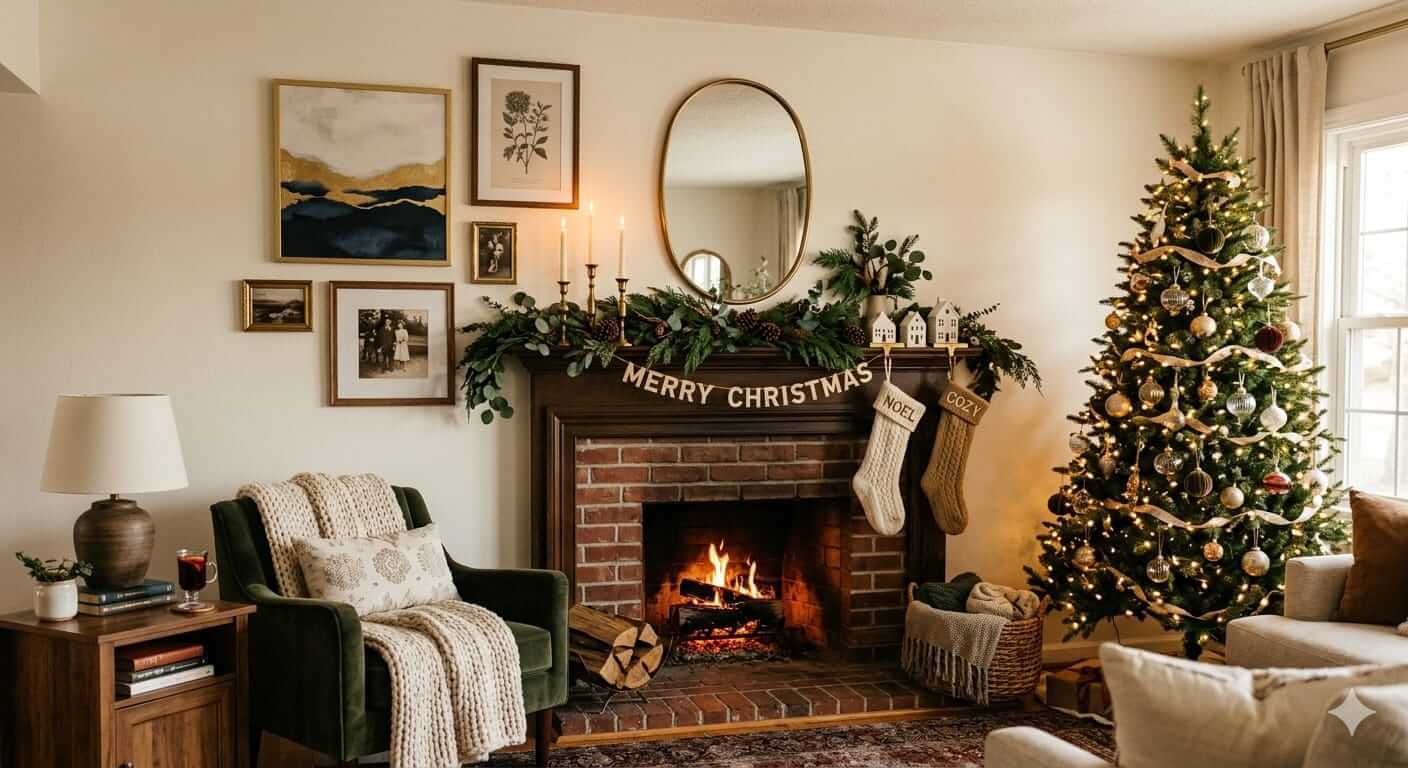
Interior designer christmas decor is a specific art form. The goal is to bring the magic of the season into a home without overwhelming the existing interior design or creating visual chaos.
Here is how designers approach interior designer christmas decor:
Start with the existing palette. The decorations should feel like a seasonal evolution of the room, not a complete visual override. If your living room is in neutral tones with green accents, a Christmas palette of cream, gold, and forest green will feel cohesive.
Choose one hero piece per room. The tree in the living room. A wreath on the front door. A garland on the mantel. A candle arrangement on the dining table. One hero piece per room, beautifully executed, is more impressive than six mediocre ones.
Edit your decoration collection. Not everything you own needs to come out every year. Choose the pieces that work with your current home and leave the rest in storage — or donate what no longer fits your style.
Use natural materials. Fresh pine, eucalyptus, holly, real candles, oranges and cloves, cinnamon sticks, pinecones — natural materials always look expensive and they smell wonderful.
Think about scale. A tiny wreath on a large door looks lost. A small tree in a large room disappears. Scale your decorations to the spaces they occupy.
Interior Design vs Interior Decorator: A Quick Recap
For those still wondering about interior design vs interior decorator : an interior designer handles the full scope of a project including structural and technical elements; an interior decorator handles the visual and aesthetic layer. Both interior designer and interior decorator skills are often found in the same person, particularly for residential projects.
Interior Designer and Decorator Salary
For those considering entering the profession, interior designer and decorator salary varies significantly by location, experience, and specialisation:
- Entry-level residential decorators: $35,000–$50,000 annually.
- Mid-career interior designers: $55,000–$80,000 annually.
- Senior commercial interior designers: $85,000–$130,000+ annually.
- Top freelance decorators with strong portfolios: Income varies but can exceed $150,000 in high-demand markets.
FAQs
What is the most impactful interior design wall decor change I can make?
Adding a large mirror opposite a window, or a single gallery wall in a key living space. Both have immediate and dramatic results.
How do I make Christmas decor look like it was designed rather than just put up?
Stick to a two-colour palette, use natural materials, choose one statement piece per room, and edit out anything that does not fit.
What is the average interior designer and decorator salary?
It varies significantly by location and specialisation. Expect $35,000–$50,000 at entry level, rising to $80,000+ with experience, and significantly more for senior commercial designers.