
Two of the most exciting conversations in interior design are: how do I find my style, and how do I celebrate the holidays beautifully without my home looking like a Christmas shop exploded? This guide addresses both. We explore the most-searched interior design decorating styles, offer rich interior design decor ideas for every aesthetic, and give you a detailed plan for interior design christmas decor that feels considered, warm, and genuinely beautiful.
Interior Design Decorating Styles: The Full Guide
With over 8,100 monthly searches, interior design decorating styles is one of the biggest topics in the design world. Here is a comprehensive look at every major style and how to identify which one is right for you.
1. Minimalist Interior Design
Core idea: Less is more. Every object earns its place.
Minimalism in interior design decorating means clean lines, neutral palettes (white, off-white, greige, light grey), uncluttered surfaces, and a focus on quality over quantity. Furniture is simple and functional. Art is sparse but considered. Storage is hidden.
Best for: People who find clutter stressful, who love order, or who have a busy life and want a home that is easy to maintain.
Key elements: Built-in storage, neutral palette, quality natural materials (stone, linen, wood), architectural lighting, statement art pieces.
2. Maximalist Interior Design
Core idea: More is more. Abundance is beautiful.
Maximalism is the joyful opposite of minimalism. Rich colours, pattern on pattern, collected objects from travels and life experiences, bold wallpaper, layered rugs, and shelves full of books and pottery. Done well, maximalism feels like a warm hug. Done poorly, it looks chaotic.
Best for: People who are passionate collectors, who love colour, who find minimalist spaces cold or blank.
Key elements: Gallery walls, jewel-tone upholstery, patterned wallpaper, layered textiles, statement lighting, displayed collections.
3. Scandinavian / Hygge Interior Design
Core idea: Warmth, simplicity, and cosiness.
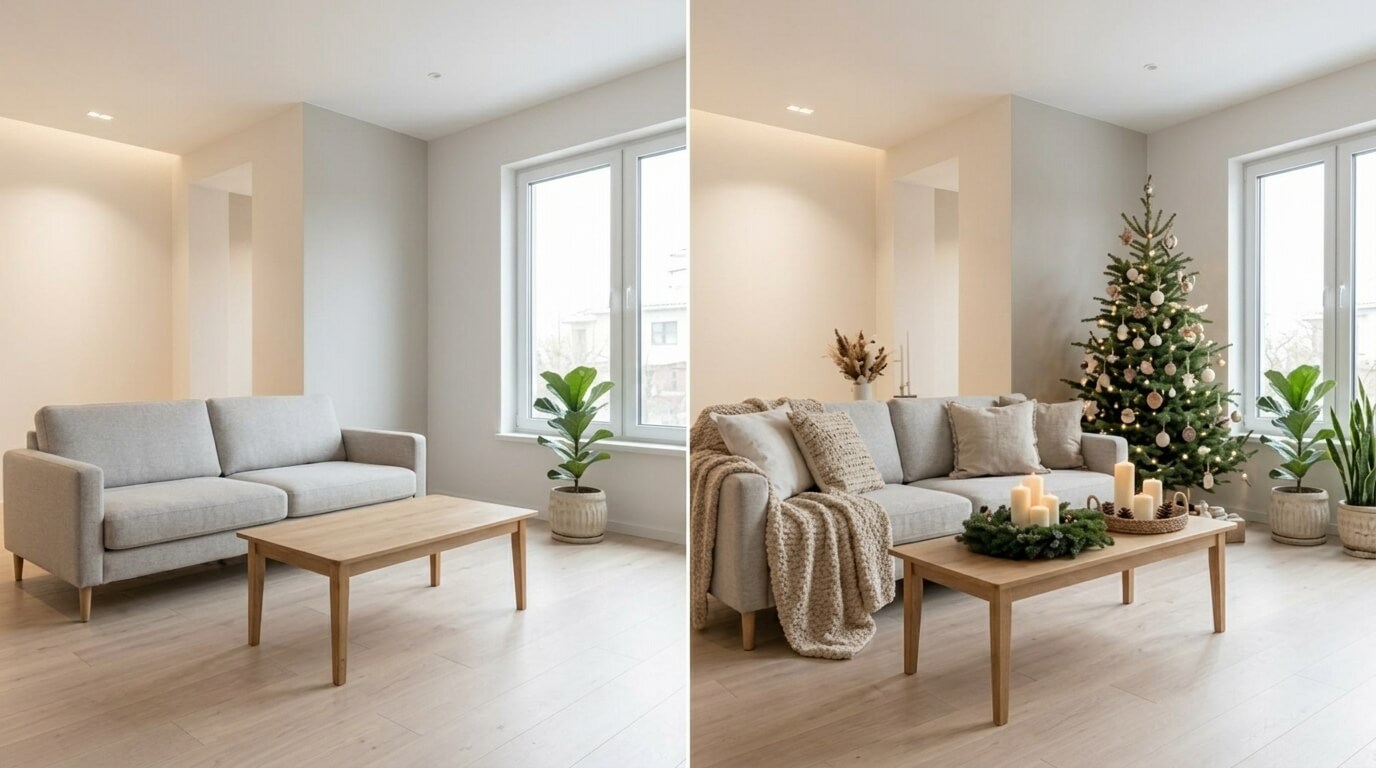
The Scandinavian style is perhaps the most influential design movement of the past two decades. It combines minimalist form with organic warmth — white walls, pale wood floors, simple furniture, candles, knitted textiles, and a deep appreciation for natural light.
Hygge (the Danish concept of cosiness) is central to this aesthetic. A Scandinavian-inspired interior should feel like a place of refuge.
Key elements: White and pale grey walls, natural pine or oak, simple cabinetry, abundant candles, linen and wool textiles, indoor plants.
4. Mid-Century Modern
Core idea: Function and form in perfect balance.
Mid-century modern design takes its cues from the 1950s and 60s — a period of extraordinary design optimism. Organic shapes, bold accent colours (orange, teal, mustard), walnut wood, and statement pieces from designers like Eames, Saarinen, and Nelson define this style.
Key elements: Low-profile furniture, tapered legs, statement lounge chairs, geometric rugs, warm wood tones, bold accent colours.
5. Industrial Interior Design
Core idea: Raw, urban, honest.
Exposed brick, concrete ceilings, steel-framed windows, Edison bulbs, black metal shelving, and reclaimed timber create the industrial aesthetic that is most at home in converted warehouses, loft apartments, and urban spaces.
Key elements: Exposed structure (pipes, beams, brick), a dark and neutral palette, black metal accents, reclaimed materials, industrial-style lighting.
6. Bohemian / Boho
Core idea: Eclectic, travelled, free-spirited.
Boho interiors layer pattern, texture, and colour in a way that feels effortlessly global and collected. Moroccan rugs, Indian block-print cushions, macramé wall hangings, rattan furniture, and an abundance of plants are all signature boho elements.
Key elements: Earthy and warm tones, mixed patterns, natural materials, plants everywhere, eclectic art, low seating, layered textiles.
7. Traditional / Classic
Core idea: Timeless, formal, refined.
Traditional interiors draw on the design language of European historical periods — Georgian, Regency, Victorian, and Colonial American. Symmetry, rich fabrics (velvet, silk, damask), antique furniture, ornate mouldings, and a restrained, deep colour palette define this style.
Key elements: Crown moulding and cornicing, symmetrical arrangements, formal furniture, rich drapery, artwork in gilt frames.
8. Japandi
Core idea: Japanese wabi-sabi meets Scandinavian minimalism.
Japandi is the most refined of contemporary styles. Natural materials, an exceptionally restrained palette (warm beige, soft black, sage green, clay), handcrafted ceramics, and an appreciation for imperfection create spaces that feel deeply peaceful.
Key elements: Low furniture, natural textures, artisanal objects, neutral palette, indoor plants, handmade ceramics.
Interior Design Decor Ideas by Style
Every style generates its own set of interior design decor ideas. Here are key ideas for each:
- Minimalist: A single large piece of abstract art. One perfectly scaled plant. A statement light fixture.
- Maximalist: A gallery wall from floor to ceiling. Patterned wallpaper as a conversation starter. A velvet sofa in a jewel tone.
- Scandinavian: Candle arrangements. A sheepskin throw on a wooden chair. A simple wreath of dried flowers.
- Mid-century Modern: A tulip table and matching chairs. A sunburst mirror. Graphic retro-inspired cushions.
- Industrial: A factory-style pendant light. A reclaimed wood floating shelf. A leather Chesterfield sofa.
- Boho: A macramé wall hanging. Stacked rugs of different patterns. A rattan peacock chair.
Interior Design Christmas Decor: A Style-by-Style Guide
Interior design christmas decorations should always feel like an extension of your home’s existing personality, not a complete takeover. Here is how to approach interior design christmas decor for each major style.
Minimalist Christmas: White candles, a simple architectural wreath, a single-colour Christmas tree (all white or all green with natural wooden ornaments). No tinsel.
Maximalist Christmas: Go all in. Multiple trees. Stockings on every hook. A garland on every banister. Mismatched baubles in every possible colour. Joy unrestricted.
Scandinavian Christmas: Candles everywhere. A simple tree with wooden Dala horse ornaments, dried orange slices, and handmade felt decorations. White stars in windows. The smell of cinnamon and cardamom.
Mid-century Modern Christmas: Retro ornaments in orange, teal, and gold. A slim, architectural tree. A starburst wreath. Coloured glass ornaments as decorative objects.
Boho Christmas: A natural, earthy tree with pampas grass, rattan stars, and clay ornaments. A macramé advent calendar. Dried citrus and cinnamon stick garlands.
Traditional Christmas: Deep red and forest green. Real candles in church holders. Tartan ribbon. Fresh holly and ivy. A full, classic tree with heirloom ornaments.
Interior Design Decorating Schools
If interior design christmas decor inspires you to study the craft more formally, interior design decorating schools offer structured pathways into the profession. Top options include:
- Parsons School of Design (New York)
- Rhode Island School of Design
- KLC School of Design (London)
- Inchbald School of Design (London)
- New York School of Interior Design
For those who prefer online study, platforms like Coursera, Udemy, and the New York Institute of Art and Design offer flexible interior design decorating schools with remote access.
Interior Design Decorating Games
Interior design decorating games have become a serious category in mobile gaming — and they are increasingly being used as informal learning tools. Games like Design Home, Redecor, and My Home Design allow players to make real decorating choices across thousands of rooms and receive ratings from a global community.
While not a substitute for formal study, these games build a genuine eye for composition, colour, and scale. Many interior design students and enthusiasts report that gaming helped them develop design intuition before they ever set foot in a classroom.
FAQs
What is the most popular interior design decorating style right now? Japandi and Maximalism are both very strongly trending. Japandi appeals to those seeking calm and simplicity, while maximalism is the response to years of minimalism-fatigue.
How do I make Christmas decorations match my interior design style? Edit your usual decorations to keep only those that match your home’s existing palette and aesthetic. Add style-specific elements — natural materials for boho, wooden ornaments for Scandinavian, jewel-toned baubles for maximalist.
Are interior design decorating games useful for learning? They build visual intuition and a sense of what works together. They are not a substitute for technical study but can be a surprisingly useful tool for developing a design eye.